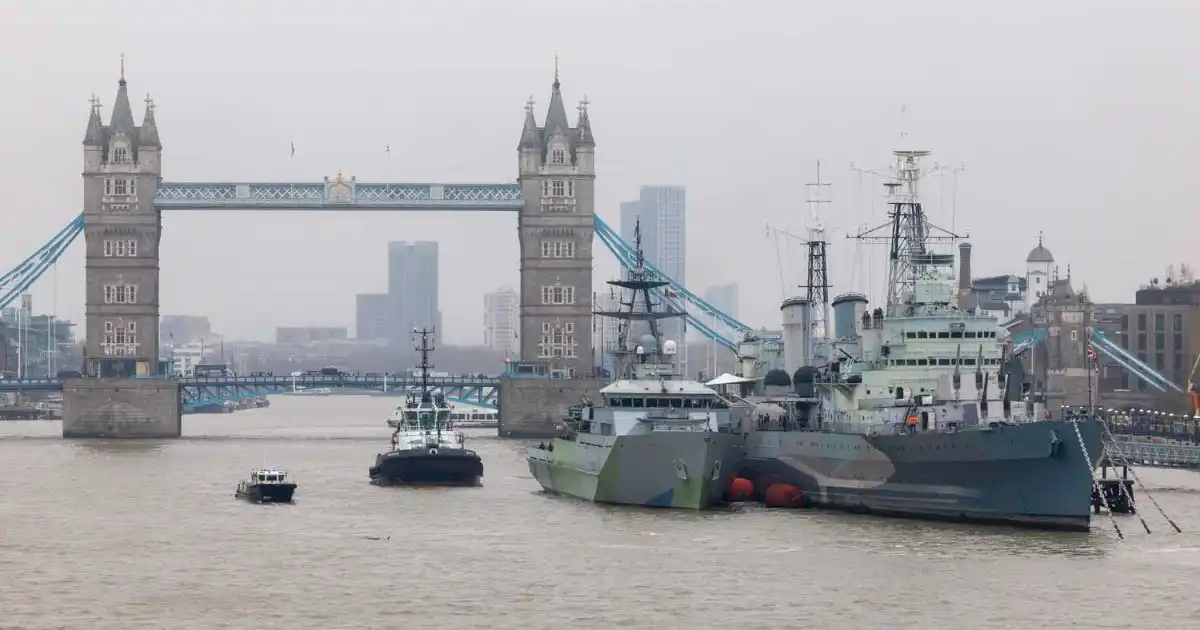
Berthed alongside HMS Belfast, HMS Tyne is providing ministers, industry leaders, and defense stakeholders with the opportunity to see first-hand how the Royal Navy is integrating crewed and uncrewed capabilities to increase resilience and operational effect.
The visit follows a busy year for the offshore patrol vessel (OPV), which has spent recent months protecting UK waters and safeguarding national interests at sea. In October, HMS Tyne was dispatched alongside HMS Dauntless and Royal Navy helicopters to report on Russian ship movements in the English Channel.
HMS Tyne‘s visit to the capital this week centers on the Royal Navy’s focus on a Hybrid Navy, where ships, submarines, and aircraft operate seamlessly alongside autonomous systems, sensors, and digital networks as a single integrated force.
Lieutenant Commander Sam Fields, Commanding Officer of HMS Tyne, said: “HMS Tyne is proud to demonstrate how the Royal Navy is evolving to meet future threats and showcase how emerging technologies and autonomous systems can work alongside our people to create a more capable, resilient and adaptable navy.”
Embarked on board the ship is equipment from the Royal Navy’s 1st Autonomous Squadron (1AS), including the Kraken K3 Scout uncrewed surface vessel and its supporting control equipment, alongside examples of uncrewed air systems from 700X Naval Air Squadron (NAS), further illustrating how autonomous technology is becoming increasingly important in front-line operations.
1AS is accelerating the transition of autonomous technologies from experimentation into operational service. The squadron is helping develop new ways of operating that combine the autonomous platforms with the skills and experience of Royal Navy personnel to increase reach, persistence, and situational awareness while also reducing the risk to human life.
The embarked systems and equipment on display demonstrate how the Royal Navy is moving beyond trials and demonstrations and toward operational capability.
This week, HMS Tyne is also the location of a $142 million investment announcement into uncrewed underwater vehicles, which will support jobs and bring specialist support services to Britain.
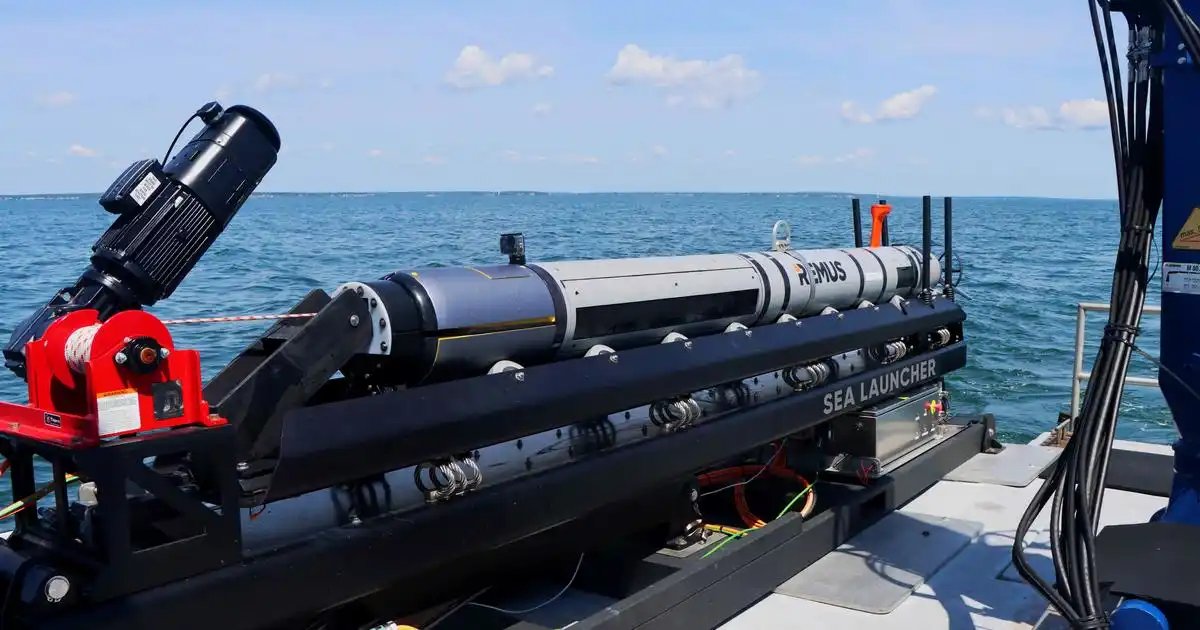
The new REMUS 620 Unmanned Underwater Vehicles (UUVs), built by HII, will find and help dispose of dangerous sea mines, which is important for freedom of navigation of the seas and keeping trade routes open, while helping to protect personnel and exposing them to less risk.
By using uncrewed systems to search potentially mined waters, sailors can remain further away from the immediate mine threat. Instead of relying on crewed vessels to operate close to potentially dangerous areas, the new underwater vehicles can be sent ahead to search beneath the surface, making minehunting operations safer, faster, and more flexible.
The vessels can travel at up to eight knots, dive to depths of 600 m, and operate for up to 110 hours on a single mission. The contract will support jobs in the UK, including in Portchester.
They will work with UK-developed SeeByte SeeTrack and Neptune software already used by the Royal Navy, building on previous British investment in its minehunting capability.
Defense Secretary Wes Streeting MP said: “This investment strengthens our ability to protect freedom of navigation, which is critical to our security and our economy.
“By using the biggest sustained increase in defense spending since the Cold War to put the latest technology in the hands of our sailors, we are taking them out of harm’s way and giving them the tools to keep vital shipping routes open, keeping us all safe in a more dangerous world.”
Throughout the week, HMS Tyne will also host engagements with government departments, parliamentary audiences, academics, and industry partners, as well as STEM-focused visits designed to inspire the next generation of engineers and maritime professionals.
By bringing together Royal Navy personnel, autonomous systems, and our industry partners in the center of the capital, HMS Tyne‘s program offers a practical display of the Royal Navy’s future direction and front-line capability, while also demonstrating how investment in autonomy and digital innovation is already delivering operational advantage today.