The Singapore Strait is one of the world’s most strategic maritime routes. Nearly 150,000 ships pass through it each year—three times more than the Strait of Hormuz—making this area a vital link in international trade. Any disruption caused by an underwater threat, particularly the presence of mines, could have major consequences for maritime safety and economic trade throughout the Asia-Pacific region.
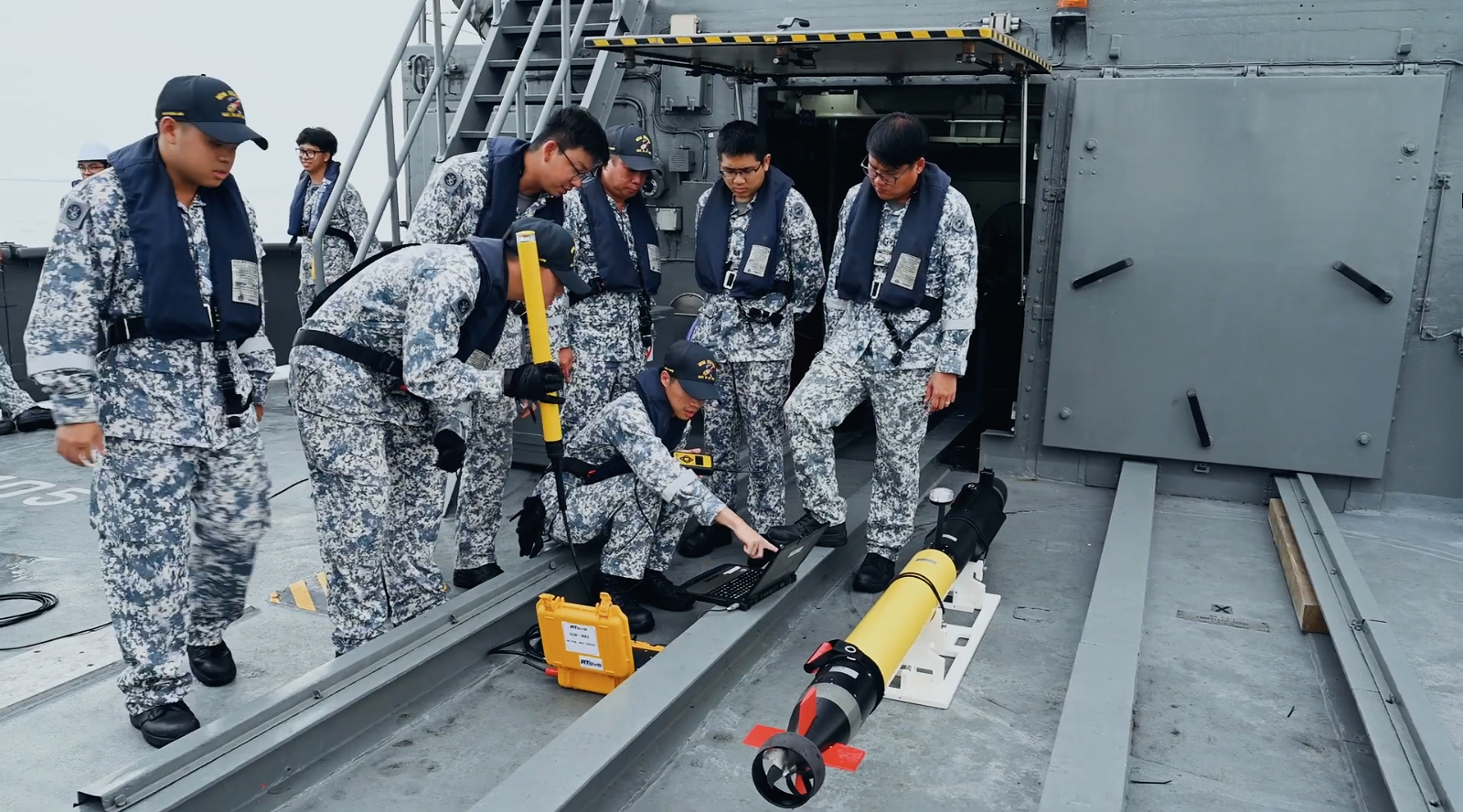
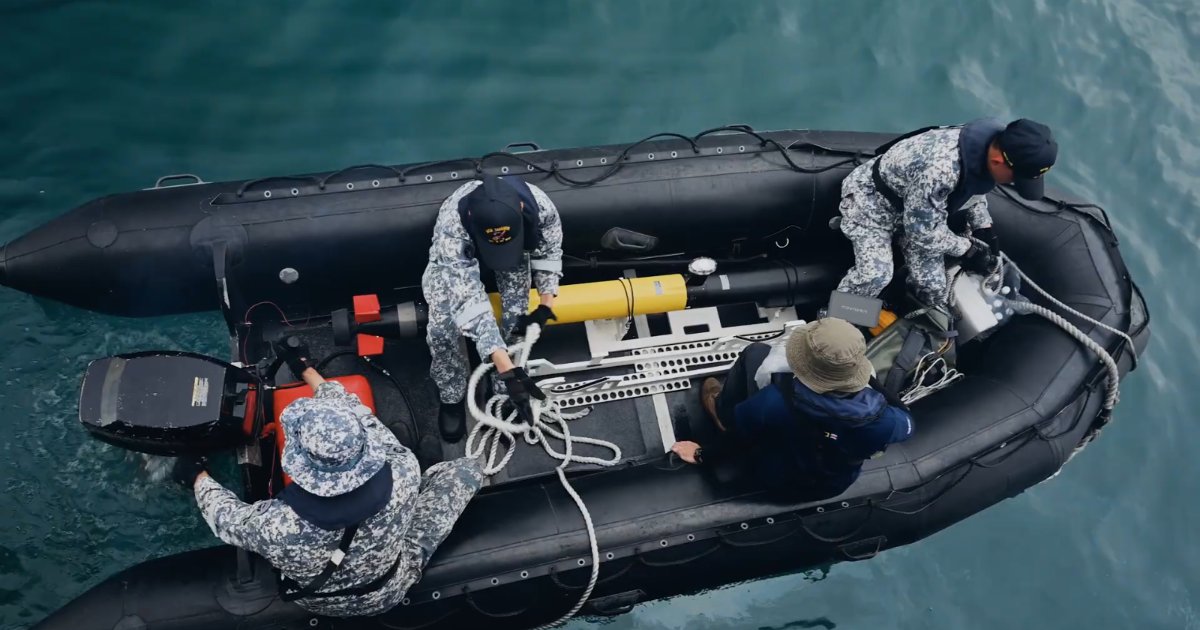
To address this challenge, the RSN now relies on several COMET-MCM systems, developed by French company RTsys Underwater Technologies in partnership with the DSTA. These AUVs are deployed during the initial stages of mine countermeasures operations to detect, locate, and identify suspicious objects on the seafloor with a very high degree of precision. Equipped with high-resolution side scan sonar, the COMET-MCM is capable of operating autonomously for more than 12 hours and mapping vast underwater areas with remarkable positioning accuracy. Preprogrammed before launch, these AUVs significantly reduce the workload on operators while speeding up reconnaissance operations and limiting crew exposure to hazardous areas.
The system is fully integrated into the Republic of Singapore Navy’s mine countermeasures strategy. The data collected by the COMET-MCM complements the data recovered from the sonar mounted on minehunters to inform the various phases of the mission: detection, classification, identification, and neutralization. When a contact is detected, it can then be confirmed using remotely operated systems or by divers equipped with specialized handheld sonar, such as the SONADIVE, also developed by the French company.
Technological Cooperation to Enhance Maritime Safety
This project is the result of close cooperation between the Republic of Singapore Navy, the DSTA, and RTsys Underwater Technologies. The DSTA oversaw the system’s integration to meet the operational requirements of the Singapore Navy, while RTsys contributed its expertise gained over more than a decade in the field of autonomous underwater robotics.
Manufactured at RTsys’s new factory in Lanester, Brittany, France, the COMET-MCM has demonstrated its robustness during numerous test campaigns under operational conditions. Evaluations have confirmed its ability to transmit real-time tracking data to operators on the surface, thereby improving decision-making and enhancing safety in operational areas.
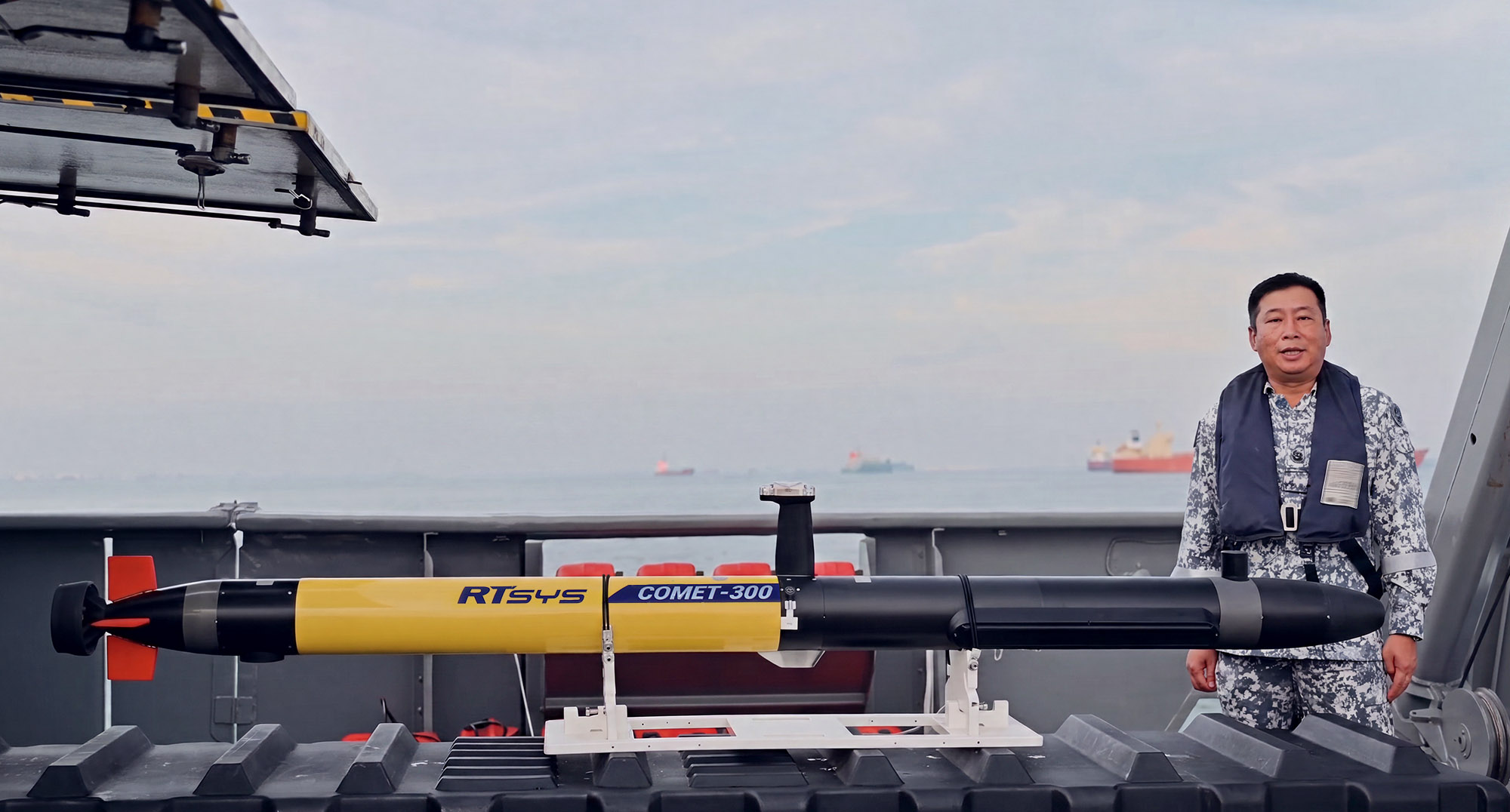
“The COMET-MCM is the result of more than a decade of cooperation with navies worldwide. Its operational deployment by the Republic of Singapore Navy is further recognition of our expertise in underwater robotics and acoustics. It demonstrates our ability to meet the demanding requirements of the world’s most advanced navies in tackling the challenges of mine warfare. Finally, the COMET-MCM highlights how technological innovation can enhance national operational sovereignty,” said Pierre-Alexandre Caux, Sales Director at RTsys Underwater Technologies.
The Republic of Singapore Navy also emphasized the strategic importance of this capability: “The Singapore Strait is a vital artery for global trade. With the COMET-MCMs, we are enhancing our ability to detect and identify underwater threats with greater precision, efficiency, and safety for our crews.”