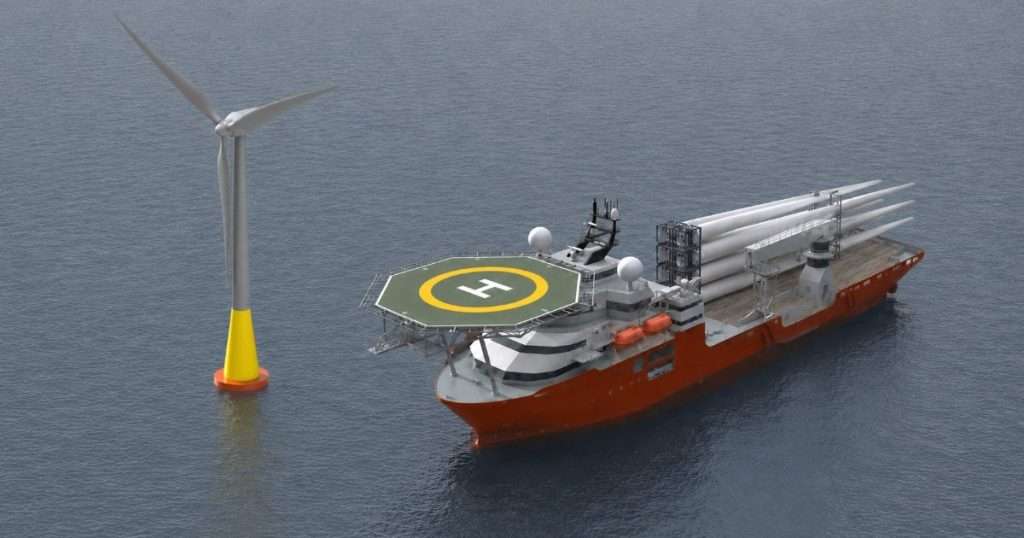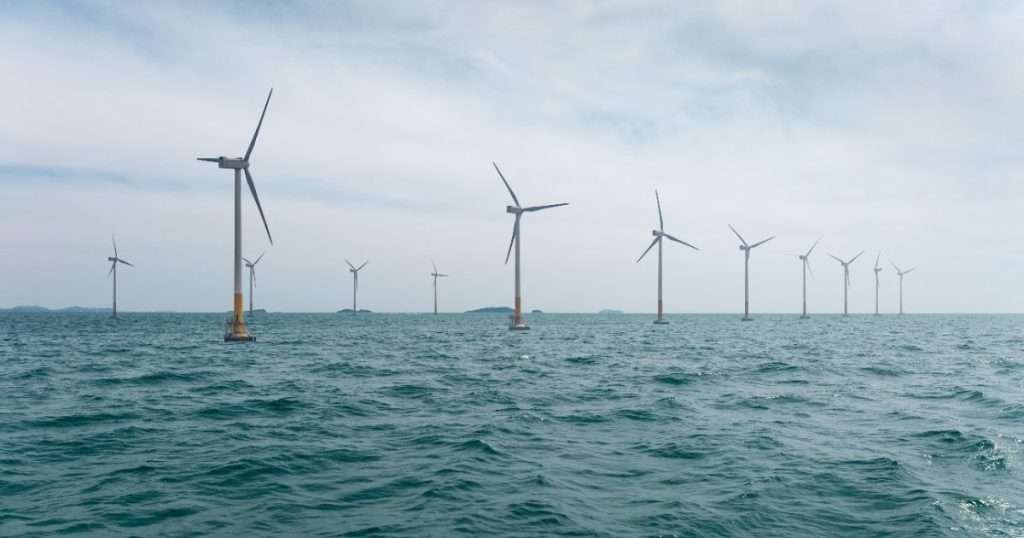

Offshore wind is becoming the backbone of Denmark’s clean energy future. The country plans to establish an artificial island in the North Sea with an initial capacity of 3 GW and another island-based hub at Bornholm in the Baltic Sea.
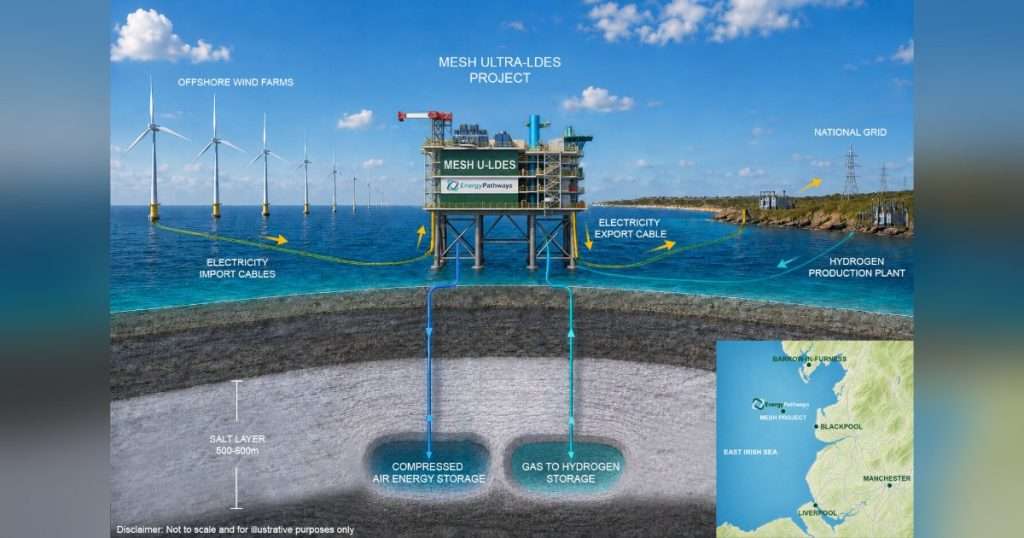
These hubs collect electricity from offshore turbines, transmit power onshore and to neighboring countries, and can convert surplus power into green fuels via Power-to-X technologies. Denmark’s energy islands are not just national assets; they are expected to be regional game changers, according to GlobalData, a leading intelligence and productivity platform.
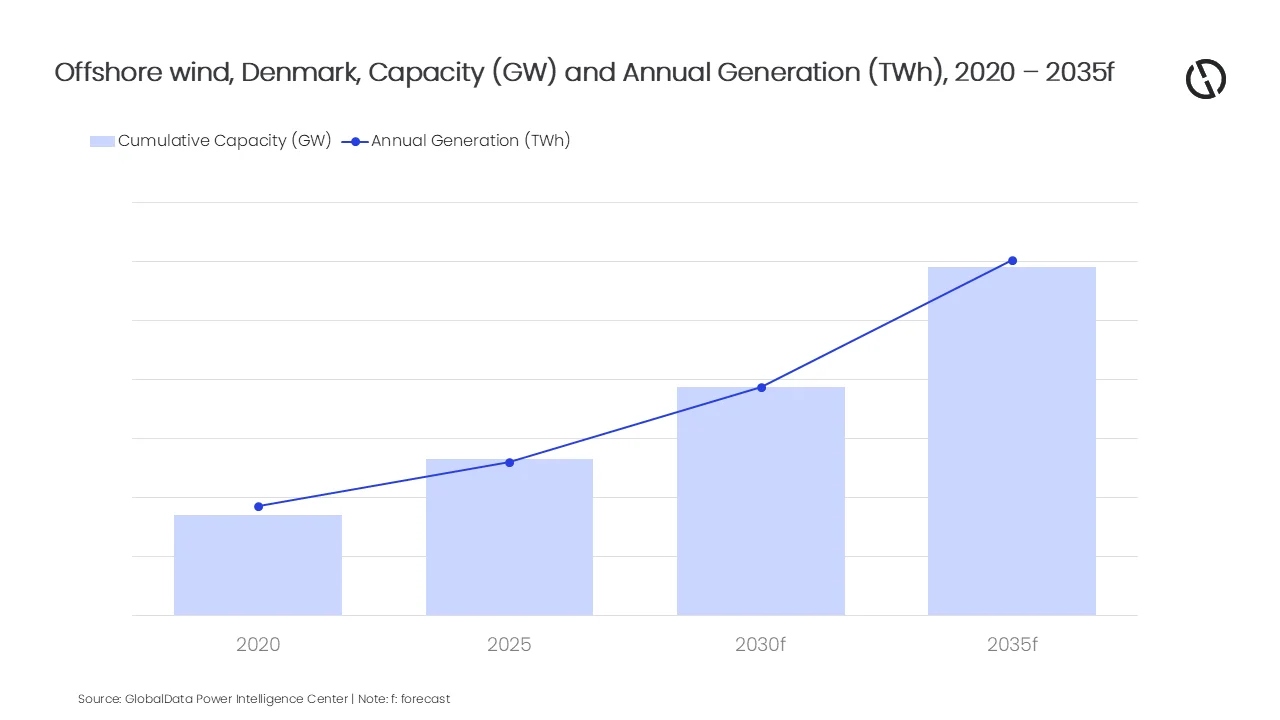
GlobalData’s latest report, “Denmark Power Market Trends and Analysis by Capacity, Generation, Transmission, Distribution, Regulations, Key Players and Forecast to 2035” reveals that the country’s electricity generation is projected to increase steadily by 2035, from around 33.6 TWh in 2025 to about 43.3 TWh, driven predominantly by wind power, solar PV, and biopower. Renewable technologies are expected to contribute nearly 98% of generation by 2035, with thermal sources receding into backup roles.
Attaurrahman Ojindaram Saibasan, Power Analyst at GlobalData, said: “More than 8.7 GW of offshore wind projects are currently in the permitting and announced stages, out of a total pipeline exceeding 17.6 GW. These projects include large-scale developments designed to function not just as wind farms but as artificial energy islands: platforms that collect, convert, and redistribute offshore-generated power to onshore grids while linking with storage, electrolyzers, and even other islands. These islands are envisioned as hubs that will help Denmark deliver more than 55% of its gross final energy from renewables by 2030 and achieve full renewable electricity supply shortly thereafter.”
With renewables accounting for over 76% of Denmark’s installed capacity in 2025 and projected to climb to nearly 87% by 2035, a massive flexibility challenge looms. Gas-fired plants, biopower, battery storage, and thermal storage, as well as demand response, will firm up the system as coal fades out completely by 2028.
Saibasan added: “System reliability will increasingly rely on balancing tools that can handle intermittent supply, particularly from offshore wind, where weather and ocean dynamics introduce unique variability. Grid upgrades, both in transmission and distribution, are vital, especially for undersea connectors from energy islands to the mainland and enhanced local grid capacity for distributed renewables, EVs and heating loads.”
Electricity trading with Norway, Sweden, and Germany is expected to intensify as artificial islands create opportunities to consolidate offshore generation, produce green hydrogen, and export surplus clean power to neighboring countries. With Denmark’s deep interconnectivity already part of the Nordic and EU-wide electricity markets, energy islands could reduce import dependence while strengthening Denmark’s role as a net exporter of renewables and hydrogen-derived products.
Saibasan concluded: “Investment in Denmark’s offshore wind is surging. From 2026 to 2030, the country is expected to deploy nearly one-third of its estimated $9.7 billion investment in offshore wind, with solar PV dominating the rest of the investment, but offshore wind projects offering greater scale and impact.
“However, building artificial energy islands comes with higher up-front costs, long lead times, and complex technical, regulatory, and environmental trade-offs. Key challenges include securing marine spatial planning, ensuring grid connection rights, building subsea cables, navigating local environmental concerns, and managing supply chain and labor constraints for massive offshore infrastructure.”