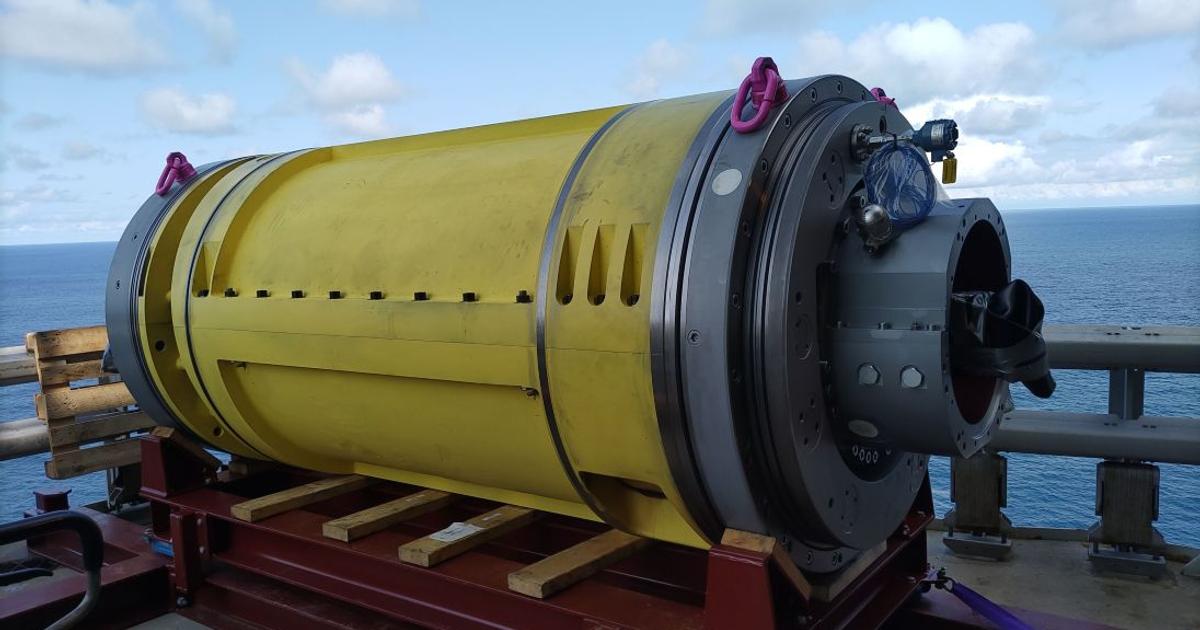
Following the installation, all three compressor trains were commissioned and brought into operation by Everllence’s field service team. The work was completed without any field modifications, ensuring full compliance with the platform’s tight schedule and operational requirements.
Oliver Tromm, Head of Product Center Zurich at Everllence, said: “Replacing compressor internals from another OEM inside existing offshore casings requires many years of experience in compressor design and revamp engineering. This project called for precise aerodynamic redesign, accurate manufacturing and close coordination between engineering, testing and field service. Completing the installation and commissioning within the planned shutdown window confirms the robustness of both the technical concept and the execution approach.”
The project scope included a complete re-design of the aerodynamic flow path, mechanical and aero-thermodynamic revamping and the manufacture of new rotors and internals, as well as testing, offshore installation and commissioning. The solution was delivered through Everllence PrimeServ, the company’s after-sales organization.
All compressor bundles underwent mechanical testing prior to shipment. Performance tests were conducted in accordance with ASME Type 2, including verification under actual surge conditions. For one unit, a dedicated test casing was manufactured based on a re-measurement of the spare bundle to replicate the operating geometry as closely as possible. These results were subsequently confirmed after installation: measured performance of the units on Troll A is above the contractual guarantees.
Equinor was closely integrated into the design and execution phases of the project, including detailed engineering and testing activities. This approach was applied to ensure that the operational, installation and schedule requirements of the Troll A platform were reflected in the final compressor design and execution plan.
About the Troll Field
The Troll field is located around 65 km off Kollsnes in southwest Norway at a water depth of approximately 300 meters. It is one of the largest gas fields on the Norwegian Continental Shelf and meets around 10 percent of Europe’s gas needs.