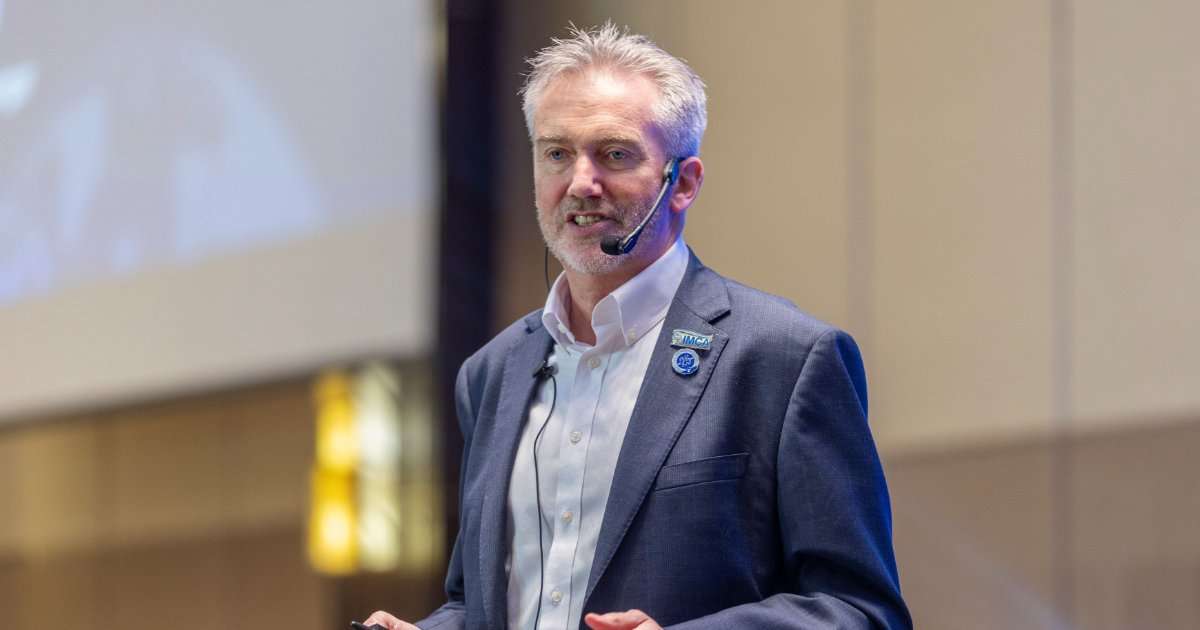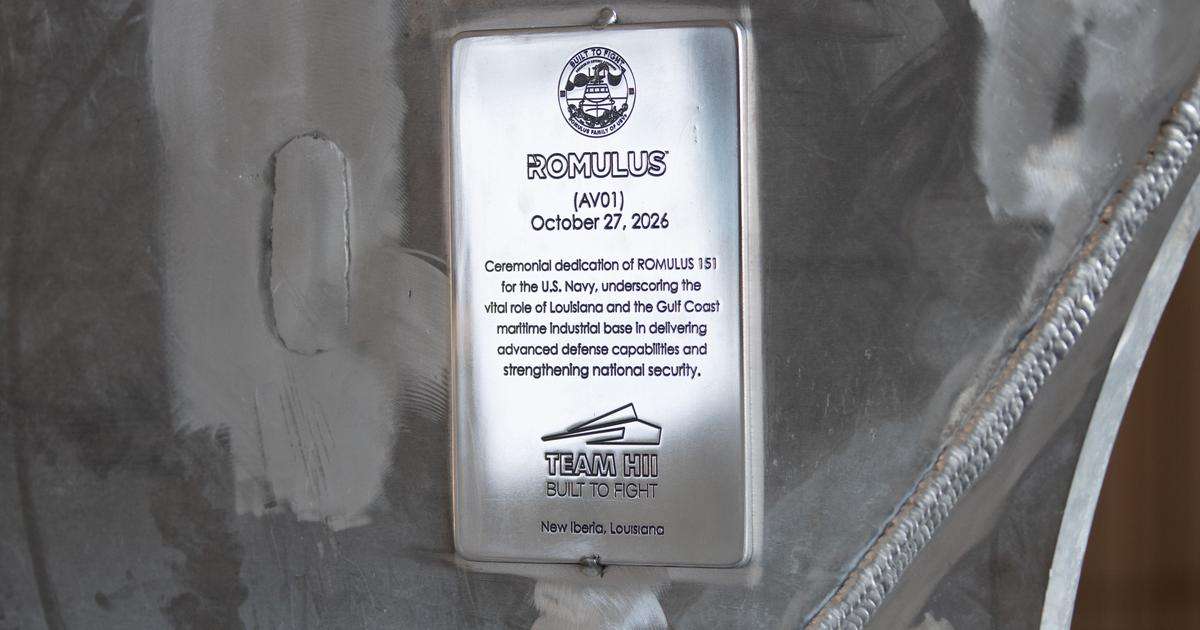
Louisiana Gov. Jeff Landry joined Vice Adm. Michael Wosje, deputy chief of naval operations for Warfighting Requirements and Capabilities (N9); HII President and CEO Chris Kastner; and Breaux Brothers Enterprises President Brannon Breaux for the celebration, which featured the ceremonial installation of a commemorative hull plaque on the first-in-class ROMULUS 151 unmanned surface vessel (USV).
The event celebrated the continued progress on HII’s production of ROMULUS USVs for the US Navy’s medium unmanned surface vessel (MUSV) program and honored the skilled workforce, regional shipbuilding partners, and advanced manufacturing capabilities supporting construction of the vessels.
The US Navy recently awarded HII a contract to build 10 ROMULUS 151 vessels under the MUSV program, reinforcing the importance of the Louisiana and Gulf Coast maritime industrial base in delivering advanced defense capabilities, sustaining skilled shipbuilding jobs, and strengthening national security.
“Louisiana is the powerhouse of the maritime industry, and today we solidified that legacy. Working with Breaux Brothers and HII, we are committed to ensuring the next generation of maritime technology is built by Louisiana hands on Louisiana soil,” Landry said. “We are proud to play an important role in helping the US Navy remain the most powerful and capable of any military in history. This is a great day for Louisiana and a great day for America’s national security.”
“Building and fielding the Medium Unmanned Surface Vessel is an essential tailored offset within the CNO’s Hedge Strategy, expanding distributed lethality, and maritime domain awareness across contested waters. Leveraging rapid commercial acquisition paths coupled with agile Fleet Introduction, we are integrating combat-ready autonomous capabilities into the Fleet to provide Combatant Commanders with asymmetric options…and we are going to do it fast!” Wosje said.
ROMULUS is a modular family of AI-enabled USVs built on HII’s open-architecture Odyssey Advanced Autonomy Solutions and designed to meet current and emerging requirements for the US Navy, US Marine Corps, joint forces, and allied partners. The platform supports a wide range of missions, including intelligence, surveillance and reconnaissance (ISR); mine countermeasures; strike operations; counter-unmanned systems; and the launch and recovery of unmanned underwater and aerial vehicles.
The US Navy’s selection of the ROMULUS 151 USV represents a significant step in the transition from unmanned maritime experimentation to operational deployment at fleet scale. The program combines HII’s decades of shipbuilding experience with proven autonomous technologies and a distributed production strategy designed to deliver reliable, mission-ready vessels efficiently and at scale.
“Louisiana has builders who have been turning aluminum into hard-working boats for generations.” Kastner said. “And when the US Navy put us to the test in the Gulf, ROMULUS met all the Navy requirements. That’s the kind of team we like to assemble, one that can be trusted to compete and win.”
HII’s ROMULUS USV production strategy draws on the expertise of established Gulf Coast maritime partners, including Breaux Brothers Enterprises, Halimar Shipyard, and Bayou Metal Supply & Manufacturing in Louisiana. The ROMULUS USV was developed in partnership with Beier Integrated Systems and Incat Crowther.
“For four generations, our family has built vessels right here in Louisiana, and today we are proud to put that experience to work in support of the United States Navy,” Breaux said. “Building HII’s ROMULUS USV is an opportunity to serve our country in a way that means a great deal to me personally and my shipbuilders. Our craftsmen have spent decades building custom, reliable, aluminum vessels that can perform in the toughest conditions, and now we are bringing that same expertise to the next generation of naval technology.”
In 2025, HII began securing the partnerships, production capacity, supplier network, and infrastructure needed to accelerate ROMULUS USV construction. Those early investments helped establish a production-ready approach designed to reduce risk and support the US Navy’s growing demand for autonomous maritime platforms.
At the core of ROMULUS USVs is HII’s Odyssey Autonomous Control Solutions (ACS), a combat-tested, modular, open-architecture autonomy suite designed to enable trusted, coordinated operations across maritime environments.
Odyssey enables unmanned vessels to perceive their surroundings, navigate, manage onboard systems and payloads, coordinate with manned and unmanned platforms, and execute complex missions with limited human intervention. Its open architecture also supports integration of emerging sensors, command-and-control technologies, and artificial intelligence capabilities.
HII, alongside partners Applied Intuition, Greenroom Robotics, and Rodi Marine, successfully completed the MUSV program’s evaluation phase, demonstrating Odyssey ACS capabilities during 13 days of US Navy-monitored testing in the Gulf of America.
The evaluation included a demanding long-endurance mission simulation in which HII’s autonomy system successfully completed a 420-nautical-mile mission over 28 hours, meeting all established success criteria and demonstrating the reliability and endurance required for sustained maritime operations.
The Louisiana celebration underscored the importance of pairing proven autonomous technologies with the nation’s shipbuilding workforce and industrial capabilities to accelerate delivery of the US Navy’s future unmanned fleet.