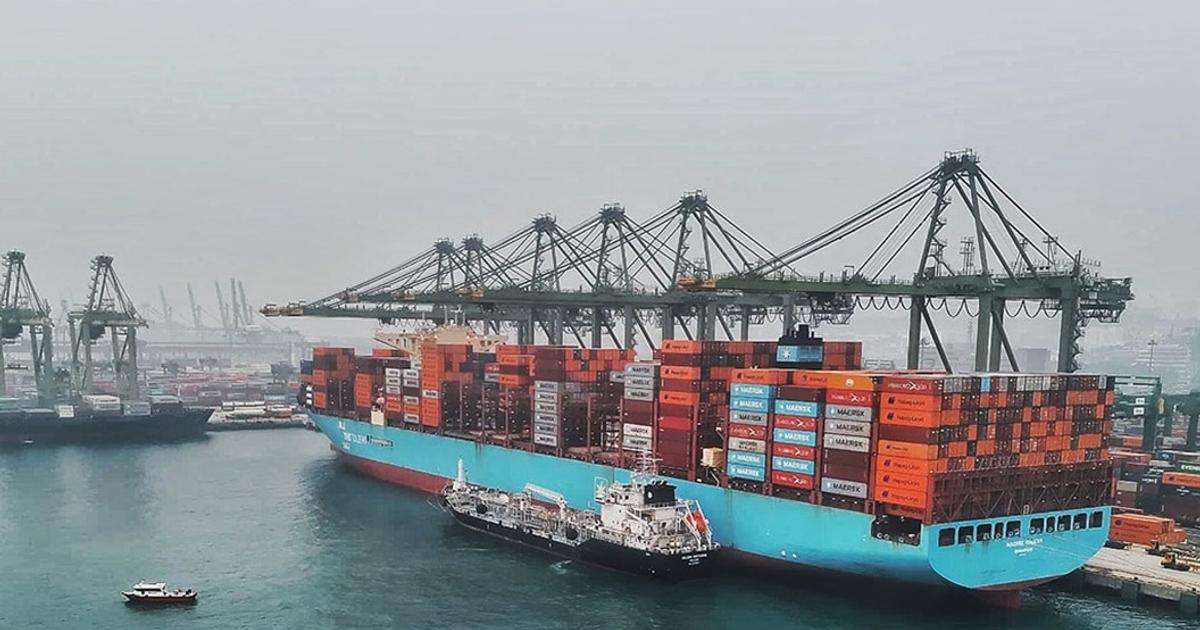
Conducted in Singapore in collaboration with the Maritime and Port Authority of Singapore (MPA) and other partners, the operation involved bunkering approximately 5,000 metric tonnes of ISCC-certified bioethanol, providing valuable operational experience and insights into the infrastructure, sourcing, supply chain readiness, and vessel operations associated with using ethanol as a marine fuel.
The operation builds on Maersk’s longstanding commitment to pursuing multiple fuel and technology pathways to support the maritime industry’s transition toward decarbonizing ocean transportation. Ethanol is emerging as a promising transition fuel because of its global availability, established production and distribution networks, and compatibility with alcohol-enabled engine technologies. When certified and sourced from low-carbon pathways, ethanol can deliver significant greenhouse gas reductions compared with conventional marine fuels.
“The energy transition requires us to explore and scale solutions that can deliver real-world impact. At Maersk, we continue to pursue a multi-fuel strategy because we recognize that no single fuel pathway can decarbonize global shipping on its own. Earlier this year, Maersk conducted a series of successful ethanol trials on the dual-fuel vessels Laura Maersk, Antonia Maersk, and Tangier Maersk,” said Emma Mazhari, Head of Energy Markets, Maersk.