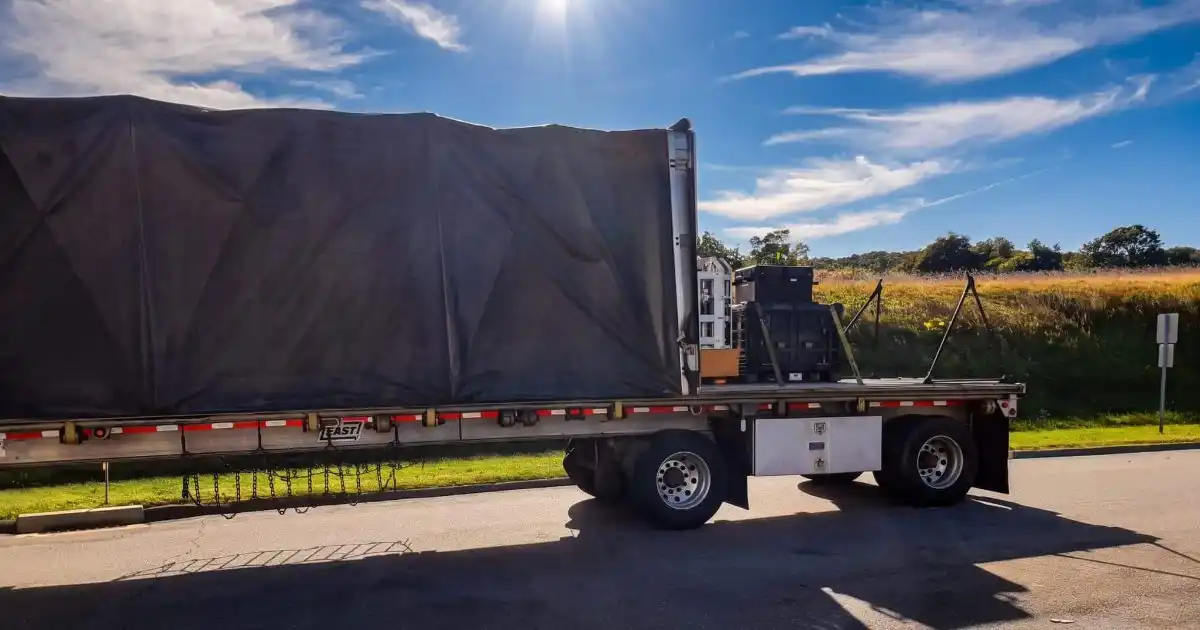
Designed and built by General Dynamics Applied Physical Sciences (GDAPS), the PDM is a critical mission-enabling subsystem that provides Lancet’s payload control and deployment capabilities. Completion of FAT marks an important step forward, moving the module from standalone development into integration with the larger system.
The PDM has shipped to Texas, where the team will integrate it with Lancet’s UUV payload module and begin integrated testing. This milestone highlights GDAPS’ engineering contribution in delivering a critical hardware capability that connects the vehicle’s autonomous operations with its payload deployment mission.
Meanwhile, Cellula Robotics continues fabrication of the MOXSEA UUV. The CAMP project aims to demonstrate an autonomous undersea system capable of deploying large payloads over distances of at least 1,000 nautical miles, operating at depths beyond 200 meters, and supporting open interfaces with government and third-party command-and-control software. The demonstration is scheduled for spring 2027.
“Shipping the payload deployment module moves Lancet from building parts to assembling a system,” said Van Gurley, President and CEO of Metron. “The GDAPS team has delivered the hardware that lets Lancet do its job at the far end of a long transit. We remain on track for the spring demonstration.”
Metron leads the Lancet Team as prime contractor and provides the mission-proven ANCC autonomy software, shoreside command and control (C2), systems integration, and project leadership. Cellula Robotics provides the MOXSEA UUV, based on Cellula’s proven Guardian and Envoy technologies, along with integration of the NautiGEN hydrogen fuel cell energy system and vehicle engineering. GDAPS develops the payload control and deployment capabilities. Integer Technologies contributes dynamic vehicle modeling and vehicle health monitoring.