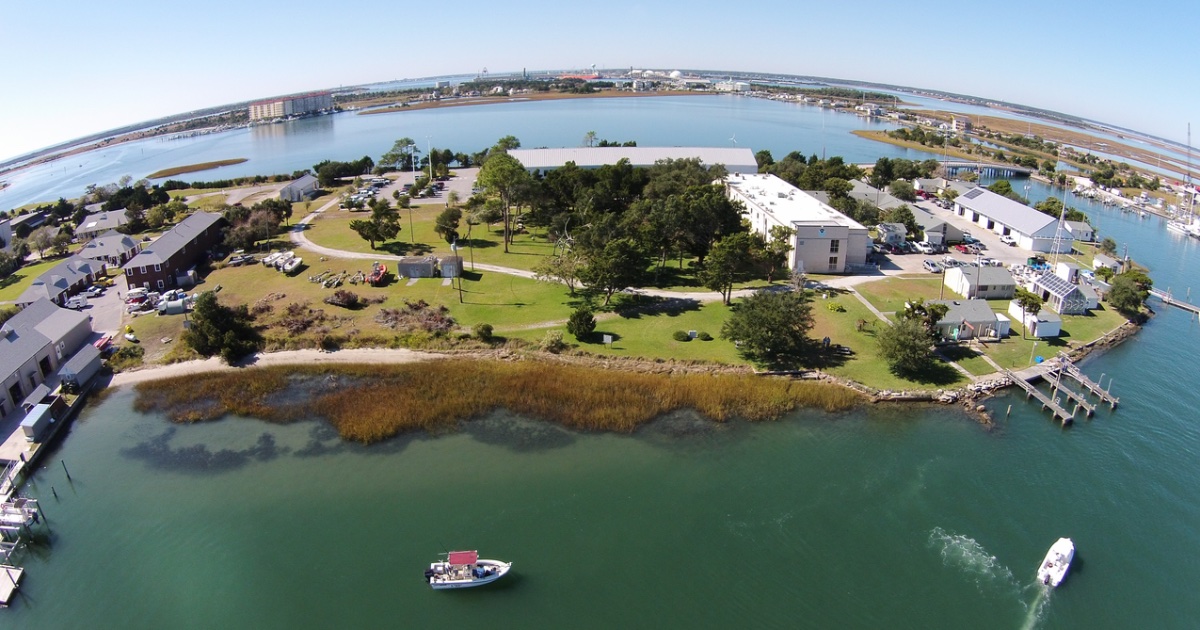
Established in 1899, the NOAA Beaufort Laboratory is the nation’s second-oldest federal marine science laboratory, predating NOAA by more than 70 years. Following a routine inspection, NOAA determined the laboratory sustained foundational damage that made building occupancy unsafe. The new facility will be built above the floodplain and designed to withstand storm and flooding events.
“For more than a century, the dedicated experts at NOAA’s Beaufort Laboratory have produced world-class science that supports our economy, advances national priorities, and enhances coastal resilience,” said Neil Jacobs, Ph.D., NOAA administrator. “This state-of-the-art facility, located within the country’s second-largest estuary and adjacent to the Gulf Stream, will enable NOAA to continue its groundbreaking research while strengthening collaboration with industry and academic partners.”
The new laboratory space will broaden NOAA’s research and services, both in coastal North Carolina and across the US, by:
- Researching, monitoring, and forecasting harmful algal blooms;
- Deploying uncrewed systems for underwater habitat mapping and coral restoration;
- Serving as a research hub to support South Atlantic fisheries management and stewardship of marine resources;
- Evaluating the performance of natural infrastructure for coastal protection; and
- Managing the Rachel Carson National Estuarine Research Reserve and providing opportunities for education, research, and compatible traditional uses.
The Beaufort laboratory houses staff from NOAA’s National Ocean Service and National Marine Fisheries Service, as well as the North Carolina Coastal Reserve and National Estuarine Research Reserve (NERR). The NERR is managed through a federal-state partnership between NOAA’s Office for Coastal Management and the NC Division of Coastal Management.