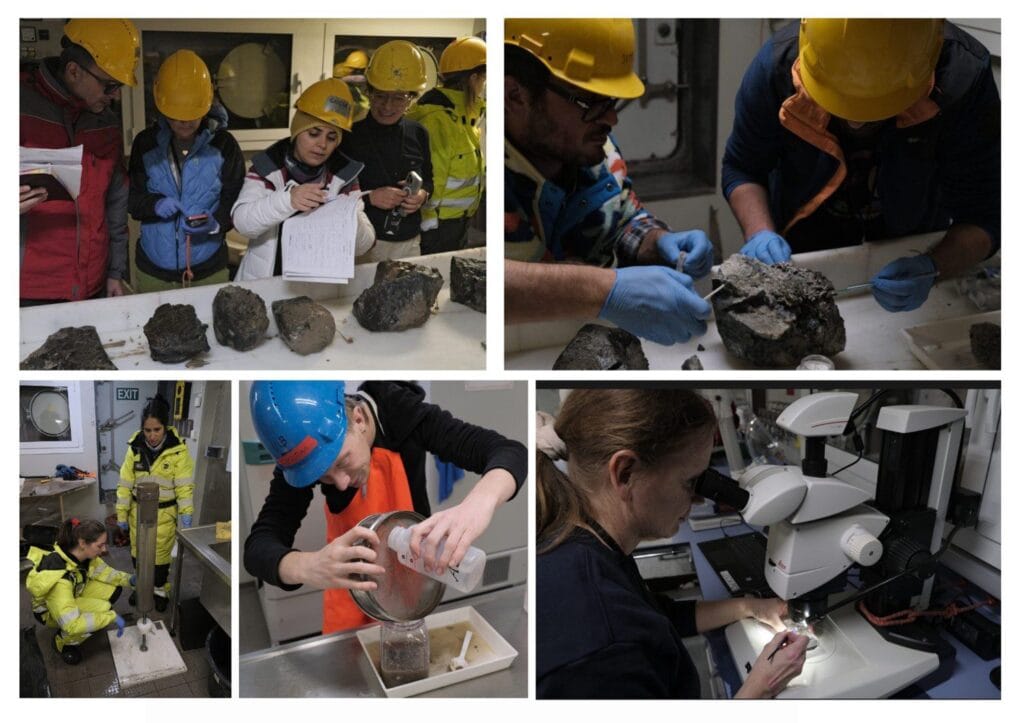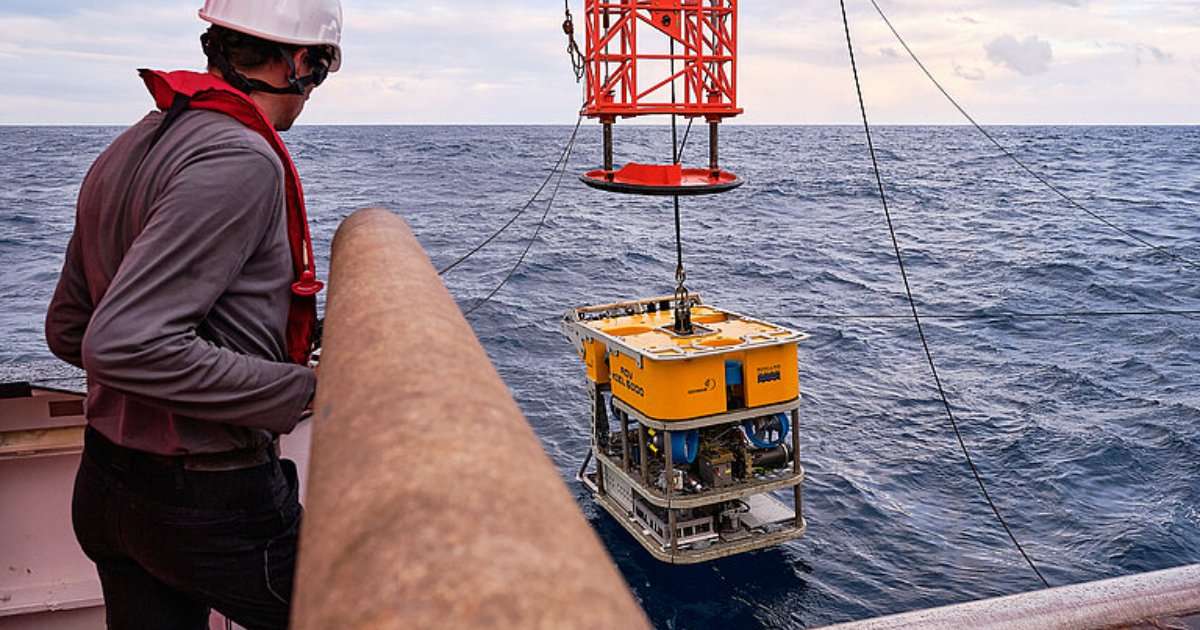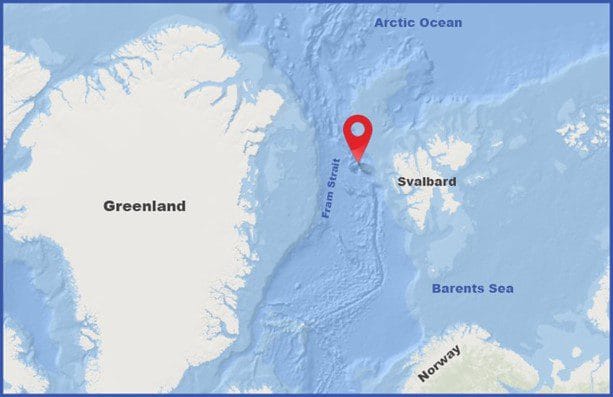
Utilizing the advanced remotely operated vehicle ROV ÆGIR 6000, researchers have been exploring the Fram Strait, a passage area situated between Greenland and Svalbard. During their exploration, the team identified a previously unknown diffuse venting field along the fault scarp of an oceanic core complex (OCC).
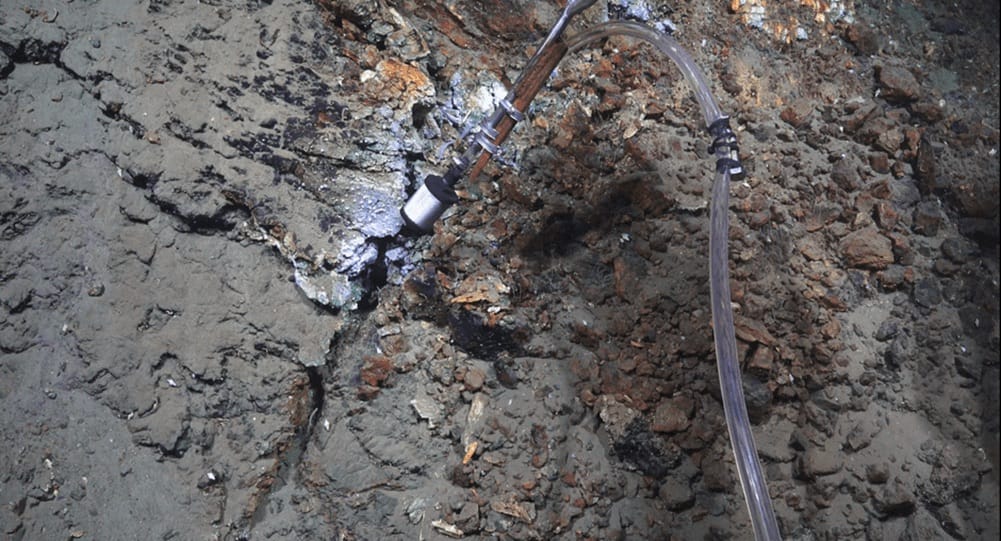
The WHOI-developed SAGE (Sensor for Aqueous Gases in the Environment) methane sensor was used in situ to confirm the presence of methane in the fluids. This is significant as the location and geology of the area point to the potential of abiotic methane, which is methane that is produced without the presence of living organisms.
Mary Burkitt-Gray is the WHOI principal investigator on this project, made possible in part through a WHOI Access to Sea Award. This project uses the newly developed SAGE methane and CO2 sensors to identify sources of dissolved gas from seeps and vents in the high Arctic, map their distributions to determine the fate of these gases, and assess their impact on the surrounding ecosystems or environment.
“By deploying SAGE on ROV ÆGIR, we were able to measure the emission of methane from this vent in real-time and confirm its composition at source,” explained Burkitt-Gray. “Using these sensors in situ helps us to immediately start to link the science behind the data.”
“The realization that we’re potentially measuring a source of methane that’s never been confirmed in this region is thrilling. It’s exciting to see what new discoveries this technology can help us make,” she added.
WHOI scientist Anna Michel and engineer Jason Kapit have developed the SAGE methane and carbon dioxide sensors, which offer portability and real-time monitoring of these gases in marine environments.
In recognition of this extraordinary discovery, the venting system has been proposed to be named the Frigg Vent Field, honoring the Norse goddess associated with foresight and wisdom. The vent field is located at a depth of 2,700 meters, showcasing the intriguing geological phenomena of the Arctic seabed.
“This discovery at the Frigg Vent Field provides the first clear evidence of active fluid flow through young oceanic crust in this part of the Arctic, revealing a system far more dynamic than previously recognized,” said the expedition’s lead scientist, Giuliana Panieri. “These achievements are only possible with coordinated and multidisciplinary fieldwork and real-time coordination between the crew and the scientists on board.”
Frigg Vent Field: A Tectonic Window into the Early Life of Earth
What makes this site unique is the fluids emitted from cracks in the rocks. Instead of focused emissions from a chimney, the team found a wide area on a fault scarp (100 m high) dislocating lower crust and upper mantle rocks from which fluids directly escape at multiple locations at the seafloor. Rock chemistry and structure make the site a promising candidate for the production of abiotic methane, a type of methane formed through water–rock reactions rather than being derived from biological materials.
The discovery offers a unique opportunity to study processes that resemble conditions on the early Earth and possibly other ocean worlds. At the OCC, the mantle and lower crust rocks, faulted and exposed to the seafloor, create chemical environments that may mimic those that first supported microbial life. The shimmering fluids observed at the site hint at active subsurface reactions that could help scientists better understand how life emerges and persists in extreme environments.
“Despite initially suffering from seasickness on my first cruise, the groundbreaking discoveries in the deep Arctic Ocean transformed the experience into pure excitement. I had the rare opportunity to explore uncharted territories and witness life’s remarkable resilience in the most extreme conditions,” said Giulia Amaglio, a postdoc from the CNR Institute of Polar Science in Italy.
Vent Fauna: Familiar Arctic Residents in a New Home
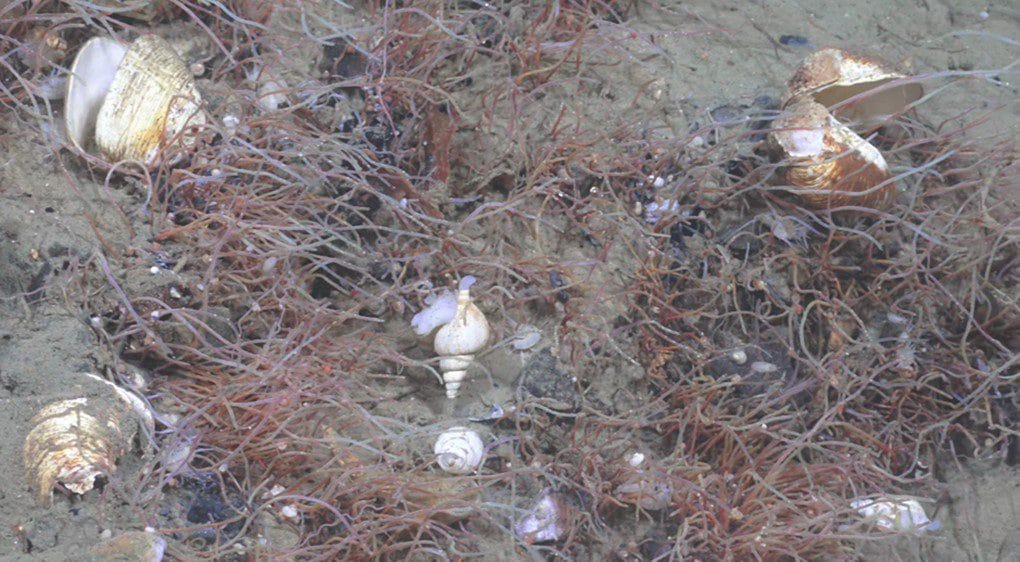
Unlike traditional hydrothermal vents that create chimneys and emit jets of hot water, the Frigg Vent Field consists of a diffuse venting system spread across a fractured rocky area. Small openings on the outcrops release fluids that support specialized deep-sea organisms adapted to cold, methane-rich environments. Initial observations and samples indicate that the Frigg Vent Field hosts a suite of fauna similar to that found at other known Arctic vent sites. Among them: snails, crustaceans, tubeworms, and fish. Samples collected during the cruise will allow researchers to identify the species present and determine how connected this new site is to other Arctic vent ecosystems.
Claudio Argentino and Ines Barrenechea from UiT, experienced in polar cruises, were still thrilled by the discovery: “It is very exciting to see something new every time we have the ROV at sea, what first appeared as bare rock revealed whitish bacterial filaments and mats likely supporting more complex organisms.”
Opening New Research Avenues
The Frigg Vent Field represents one of the most fascinating discoveries of the expedition, opening new research avenues into methane formation, deep-sea ecosystems, and Arctic geology. The samples and data collected will be analyzed over the coming months, enhancing our understanding of this unique system and its global importance. Building on these findings, the team is already planning the following steps to strengthen existing partnerships and forge new collaborations within the international polar community. These discoveries also support the long-term vision of Polarhavet 2050, fostering a coordinated strategy to advance deep-ocean exploration and research for sustainable ocean management.