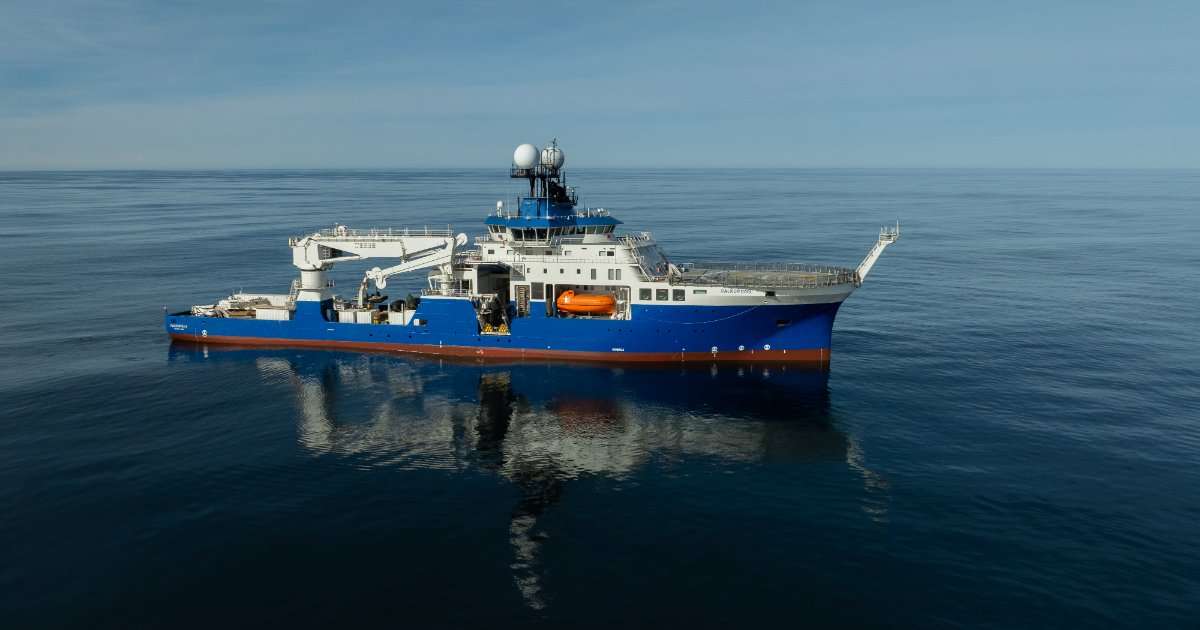
The GOMO Innovation Program invests in the transformative research critical for modernizing ocean observing and supporting high-quality research essential to inform society about the ocean’s role in environmental change. This year, to meet evolving global ocean observing needs and increased demands for ocean data, the GOMO Innovation program funded eight AI and Data Management pilot projects. The expected total investment of $1,547,446, including funding from partners at the US Integrated Ocean Observing System (IOOS) Program and Uncrewed Systems (UxS) Operations Center, will pilot AI tools for observation mission planning, metadata improvement, quality control of observing system data, data visualization, and evaluating the impact of observations on forecasts, models, and products.
The eight AI and Data Management pilots start this fall and will conclude by the fall of 2028. More details about these pilots are included below:
Artificial Intelligence (AI) Assisted Route Planning for Co-located Uncrewed Surface and Underwater Vehicles
Principal Investigator: Andrew Chiodi, University of Washington
Total award: $200,000
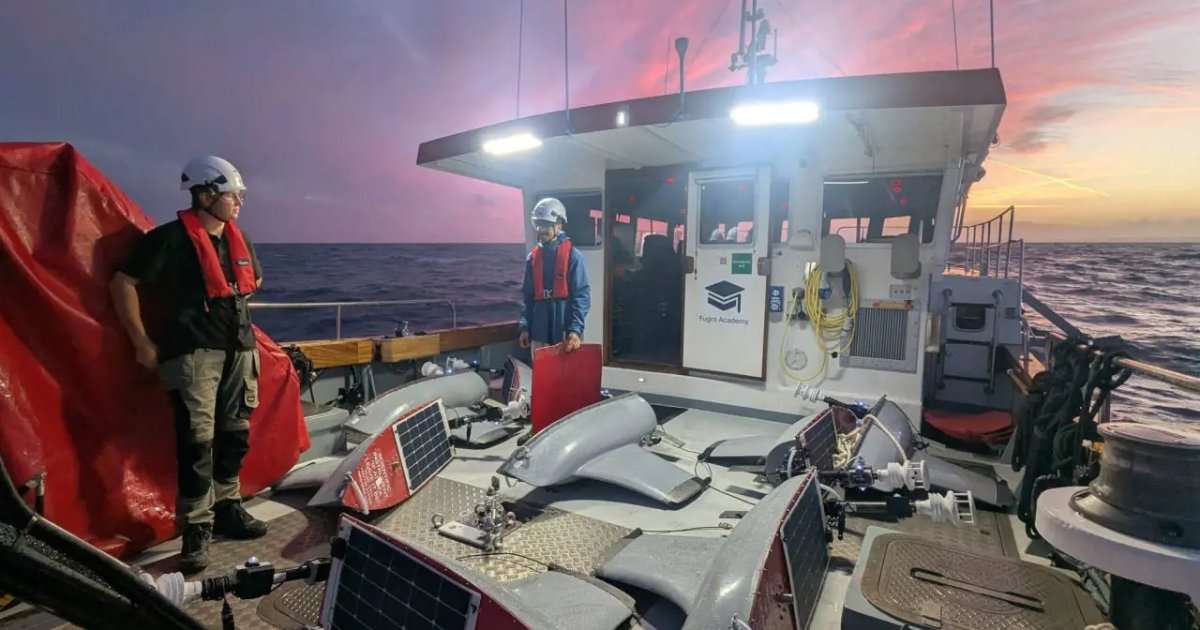
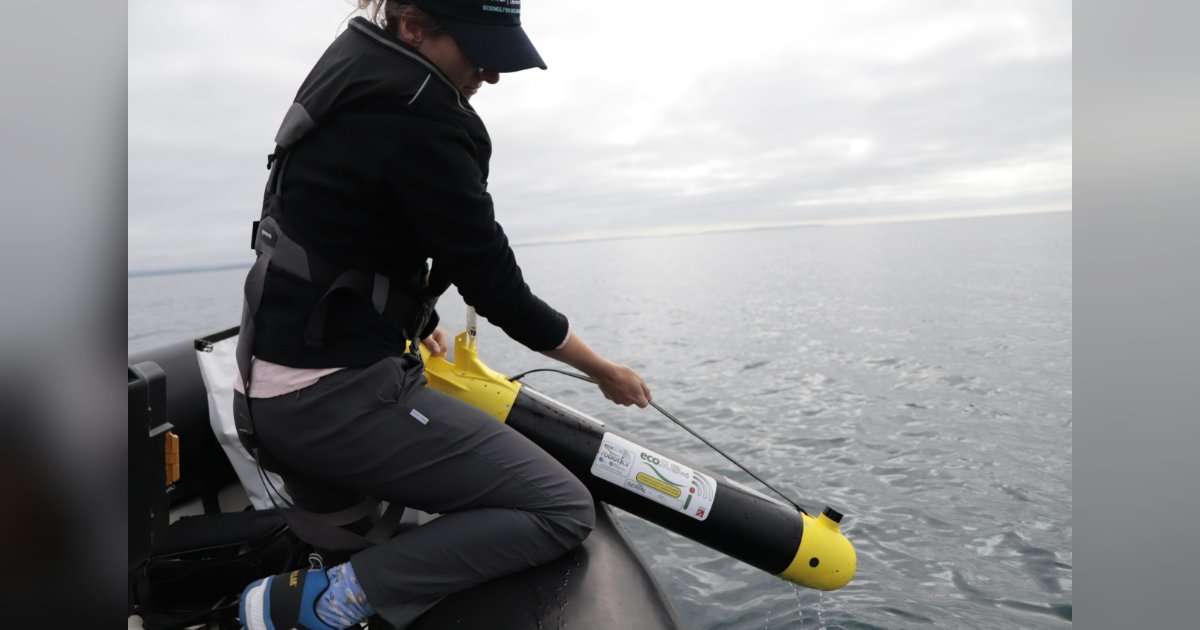
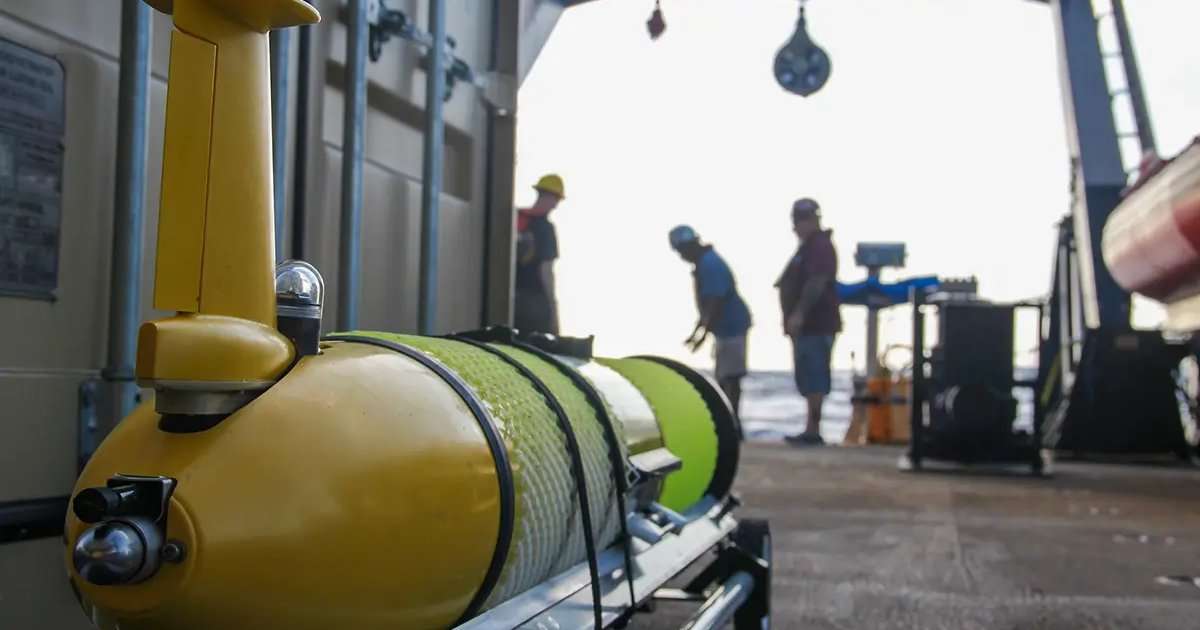
Uncrewed system developments are rapidly reshaping NOAA’s ability to measure ocean and atmosphere interactions, which are critical to predicting a wide range of weather and extreme events. This project will develop an AI assisted mission planning tool for NOAA to optimize uncrewed surface vehicle (USV) and underwater vehicle (UUV) routing. Based on mission objectives and environmental forecasts, the tool will maximize vehicle safety and enhance scientific value across ocean observing applications.
This project was jointly funded by the US Integrated Ocean Observing System (IOOS) Program, Uncrewed Systems (UxS) Operations Center.
AI-Driven Quantification of Ocean Observation Impact on Hurricane Forecast Error
Principal Investigator: Greg Foltz, NOAA’s Atlantic Oceanographic and Meteorological Laboratory and Jun Zhang, University of Miami
Total award: $199,996
Ocean observations are vital to helping us understand the ocean’s role in extreme events, like hurricanes; yet, it is currently difficult to determine where additional ocean observations would have the greatest impact to improving forecasts. This project will provide an AI-driven framework to quantify how ocean observation coverage influences errors in official hurricane forecasts. By linking observational coverage to forecast error, the project aims to translate insights into actionable decision intelligence at a lower cost than traditional Observing System Experiments (OSE) and Observing System Simulation Experiments (OSSEs).
AI-Driven Virtual Testbed of the Global Ocean Observing System: A Multi-Scale Causal Network Approach for Evaluating Infrastructure Impact
Principal Investigator: Vyacheslav Lyubchich, University of Maryland Center for Environmental Science
Total award: $200,000
Observing System Simulation Experiments (OSSEs) and Observing System Experiments (OSEs) offer NOAA an avenue for optimizing its investment in future observing systems; however, these tools are computationally expensive. By shifting from physics-based simulations to an agile, AI-based framework, this project will pilot a testbed to support AI-driven data denial experiments that allows NOAA to simulate sensor loss, optimize infrastructure investments, and maximize global forecast capabilities for the Southern Ocean.
AI-Enabled Metadata Generation and Quality Assessment for Ocean Observations
Principal Investigator: Karen Stocks, Scripps Institution of Oceanography
Total award: $177,602
Metadata generation and quality assessment are essential for enabling reuse of GOMO-supported observations; however, these processes are time-intensive and largely manually implemented. This project will evaluate and apply AI methods to automate portions of these labor-intensive workflows, including (1) metadata extraction from unstructured sources and mapping to the GOOS/Ocean OPS metadata schema, and (2) quality screening for flag consistency, data formatting, and parameter naming based on controlled vocabularies, using Global Ocean Ship-based Hydrographic Investigations Program (GO-SHIP) data as a test case.
AI-enabled Application for Automated Metadata Enhancement and Quality Control
Principal Investigator: Liqing Jiang, University of Maryland, College Park
Total award: $190,000
Accurate metadata is critical for data discovery and reuse. This project will develop a robust, AI-enabled tool trained on OCADS (NOAA Ocean Carbon and Acidification Data System) data holdings to support (1) metadata extraction from unstructured sources and production of OCADS-compliant metadata, and (2) targeted QC audits, including structural anomaly detection and standards compliance validation.
Towards a Machine Learning (ML) Argo Delayed-Mode Quality Control (DMQC) Assistant
Principal Investigator: Susan Wijffels, Woods Hole Oceanographic Institution
Total award: $180,137
Argo has revolutionized ocean data collection. The high-quality of Argo data is maintained through time-consuming expert examination and manual flagging of every float record. This project aims to develop machine learning tools, trained on historical high-resolution Argo Conductivity, Temperature, and Depth (CTD) profile data and contextual inputs such as climatology and sea level anomaly data, to assist with Delayed-Mode Quality Control (DMQC). The ultimate goal is to increase efficiency by reducing operator time expended on each float record and improve the consistency and quality of the Argo dataset.
A Multi-Agent System for Ocean Data Analysis and Knowledge Generation
Principal Investigator: Olmo Zavala-Rombero, Florida State University
Total award: $199,711
GOMO collects large amounts of ocean observing data; however, turning this data into useful products, such as maps, graphs, and summaries of changing ocean conditions, often requires extensive time and dedicated programming. This project will focus on developing a multi-agent AI system to analyze Argo observational data, producing defensible, traceable, and reproducible scientific answers and data visualization products based on plain-language user questions.
An Agentic Multi-Tier Impact-Tracking system for GOMO-Supported Observations
Principal Investigator: Garrett Graham, North Carolina State University
Total award: $200,000
To better co-develop the innovative tools and capabilities to provide seamless, integrated access to ocean data needed to improve critical decision-making and planning, GOMO must first understand how GOMO observations are being used. This project will enhance the visibility of GOMO observational data use by developing a prototype agentic system that traces the full downstream life of GOMO observations through scientific papers, data assimilation products, operational forecast models, media coverage, and policy decisions.