At RIMPAC 2026
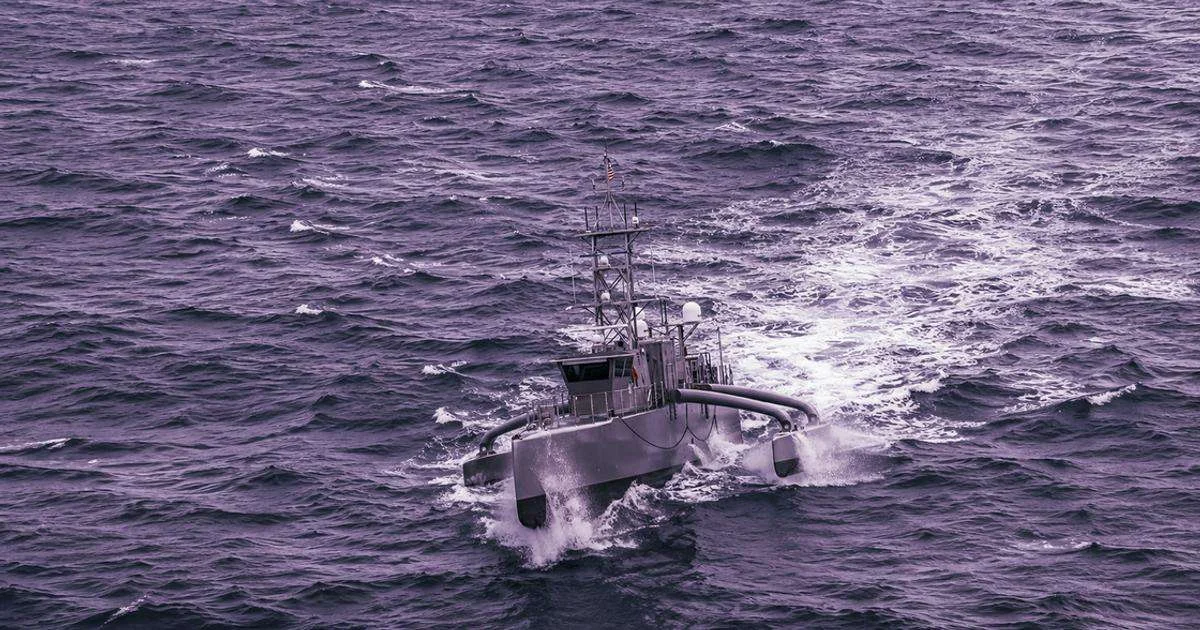
Sea Hunter, originally developed by Leidos, participated in RIMPAC as the exercise’s only Medium Unmanned Surface Vessel (MUSV). Seahawk is operating alongside crewed naval forces as the first MUSV to deploy operationally with a carrier strike group.
Powered by the Leidos Autonomous Vessel Architecture (LAVA), Sea Hunter operated autonomously more than 2,000 nautical miles from Pearl Harbor, Hawaii, to San Diego, California; demonstrated autonomous surveillance; and demonstrated manned-unmanned teaming, operating as part of a larger naval force as well as a stand-alone platform.
With the USS Theodore Roosevelt Carrier Strike Group
Seahawk is operating alongside crewed naval forces as the first MUSV to deploy operationally with a carrier strike group.
Operating within the strike group’s communications, command-and-control, and operational framework, Seahawk’s capabilities include:
- Autonomous navigation and perception;
- Collision avoidance: Compliance with International Regulations for Preventing Collisions at Sea (COLREGs) and hazard avoidance;
- Keep Out Zone avoidance: Automatically navigates around designated restricted areas;
- Communications failover and remote control: Maintains control through alternate communications paths; and
- GPS-denied navigation: Followed commanded waypoints without GPS and reintegrated GPS while remaining on track
“Sea Hunter and Seahawk show what more than a decade of operating autonomy at sea brings to the mission,” said Mike Rickels, Leidos SVP for Maritime. “Real-world operations validate performance while providing lessons that further refine autonomy for future missions.”
Sea Hunter and Seahawk are powered by LAVA, the modular software that enables autonomous navigation, mission execution, obstacle avoidance, and other critical functions. It also provides a common autonomy foundation that can support different vessels and mission requirements.