The Pacific is home to five of the seven US security alliances: Australia, Japan, the Philippines, Thailand, and the Republic of Korea (ROK). This was the first time in nine years that the ROK and the United States conducted this complex, combined training event.
The international logistics exercise tests the ability of US forces to mobilize and transport personnel and materiel, and establish logistics lines in a simulated contested environment.
More than 1,900 service members from the US Army, US Marine Corps, US Navy, ROK Navy, and ROK Coast Guard participated in the exercise.
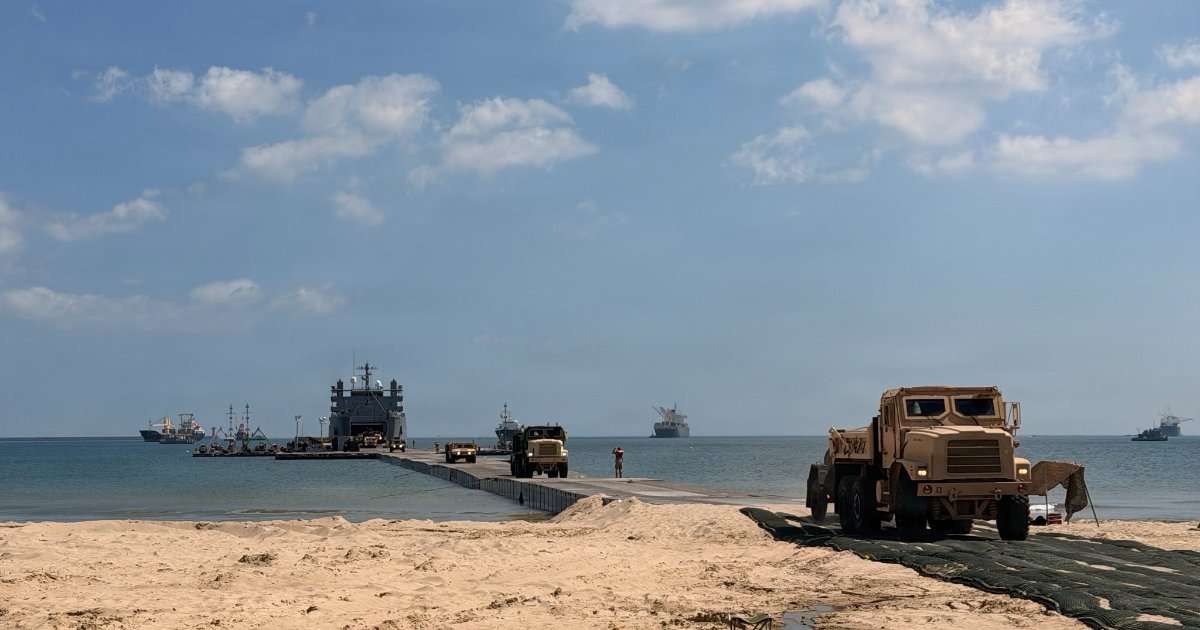
The training focused on the process of discharging military cargo from ships at sea to an undeveloped shoreline. ROK and US service members worked together to establish temporary port facilities to deliver equipment, vehicles, and supplies, ensuring combined forces can sustain operations in any environment or degraded port scenario.
“During CJLOTS 26, PSU 309 exemplified the US Coast Guard’s hallmark agility and operational flexibility, proving our ability to seamlessly integrate into the joint and combined command structure and demonstrate our outstanding value to the Joint Force and steadfast commitment to the US Pacific Command area of responsibility,” said Cmdr. Kristopher Nolan, PSU 309’s commanding officer.
PSU 309’s participation highlighted the Coast Guard’s adaptability within a combatant command, providing waterside security to US and ROK forces in a 24-hour operational environment and deterring 70 recreational vessels from entering the security zone.
Conducted in the spirit of the October 1, 1953, ROK–US Mutual Defense Treaty, CJLOTS 26 reinforces the alliance’s role as the linchpin of regional peace and security and reaffirms the United States’ unwavering commitment to the defense of the Republic of Korea.
PSU missions include providing waterborne and land-based protection for shipping and critical port facilities. PSU 309 is one of eight units capable of global deployment within 96 hours of recall. PSUs also support domestic missions, including humanitarian assistance, and can operate independently or alongside other Department of War units.