
The orders span multiple US government customers and mission sets, including Lightfish USVs for delivery to the US Marine Corps and the US Navy. Together, the orders reflect growing demand for small, long-endurance USVs across a broad base of military users.
The mix of procurement and RaaS orders also reflects how government customers are buying maritime autonomy. Some customers are acquiring vessels outright, while an increasing number are contracting for persistent sensor coverage as a service, with Seasats operating and maintaining the vessels on their behalf.
“This isn’t funding to explore the use of autonomous systems years from now. These are customers putting real dollars behind capability they can deploy today,” said Mike Flanigan, CEO of Seasats. “We’re seeing demand grow across the US government because small, long-endurance USVs solve an increasingly relevant problem: how do we maintain persistent awareness at sea, at scale, and at range.”
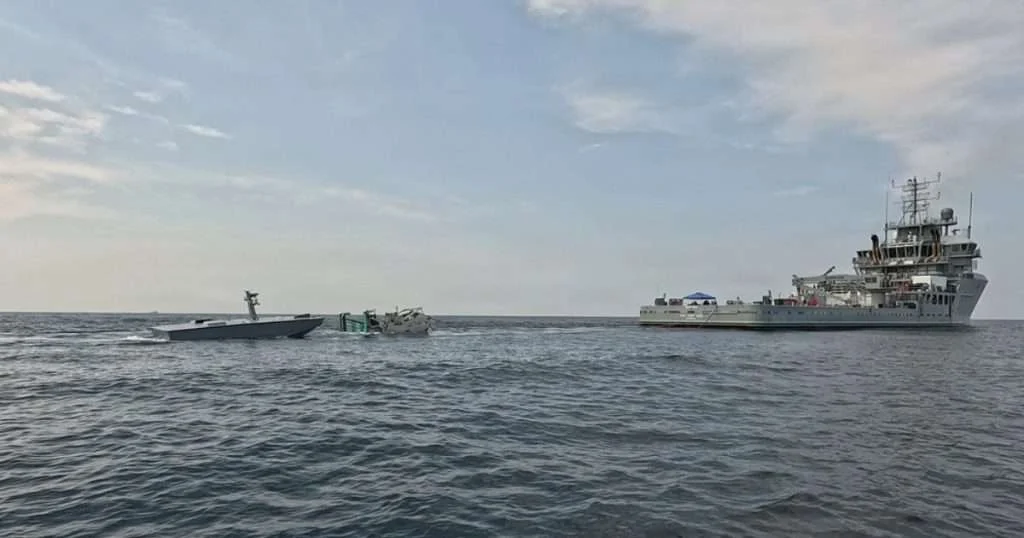
Each Lightfish USV is roughly 11 feet long and weighs 360 pounds. The vessels are solar-powered, capable of multi-month endurance on station, and small enough to be transported in the back of a pickup truck and launched by two people from a boat ramp. The USV’s modular payload bay has carried electro-optical and infrared cameras, surveillance payloads, and sonar systems across prior missions, allowing a single hull design to be configured to address the objective at hand.
For Seasats, more than $24 million in bookings in a single month marks a significant acceleration in the company’s growth and its role as an increasingly trusted provider of operational USVs to the US government.
Seasats has secured over $100 million in customer contracts and has USVs operating with the US Navy, NOAA, and leading research institutions worldwide. The company is headquartered in San Diego and backed by groups including Shield Capital, L3Harris Technologies, and Konvoy Ventures.