Autonomous maritime systems are gaining importance worldwide—for science, industry, and maritime safety. However, a key challenge remains: translating research findings into reliable and practical technologies.
This is where MAROKI comes in. In addition to the DFKI, with its research divisions Robotics Innovation Center and Marine Perception (Bremen and Oldenburg), the consortium includes the Fraunhofer Institute for Manufacturing Technology and Applied Materials Research IFAM (Bremen, Cuxhaven, and Heligoland), the German Aerospace Center (DLR) with its Institute for the Protection of Maritime Infrastructure (Bremerhaven) and the Institute for Maritime Technologies and Propulsion Systems (Kiel and Geesthacht), as well as MARUM – Center for Marine Environmental Sciences at the University of Bremen.
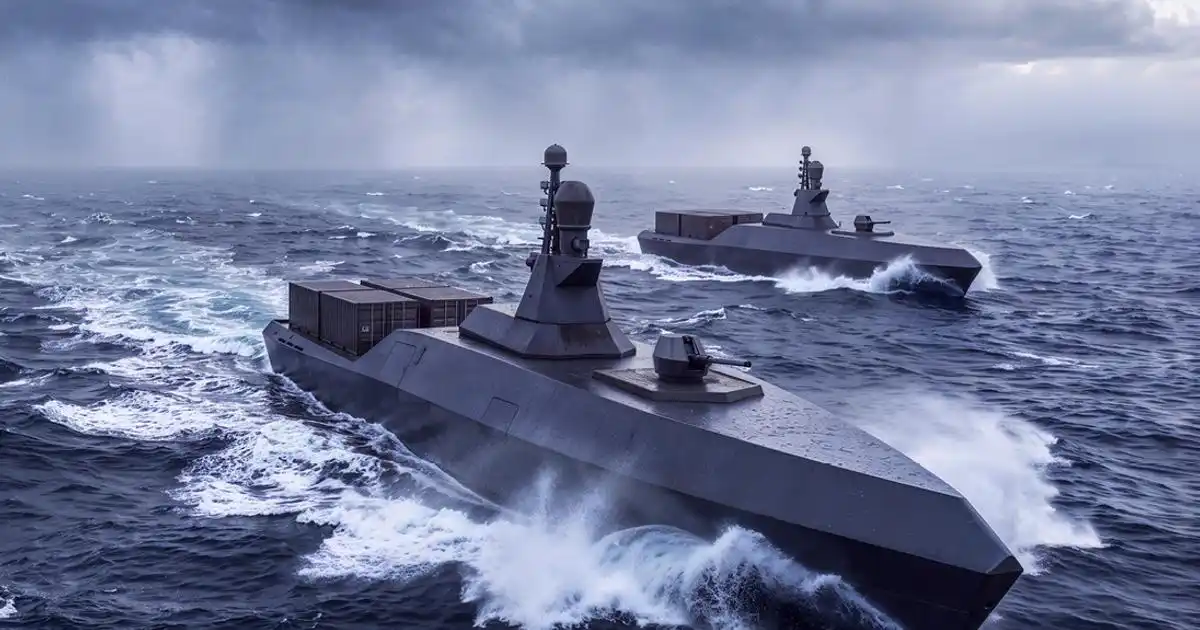
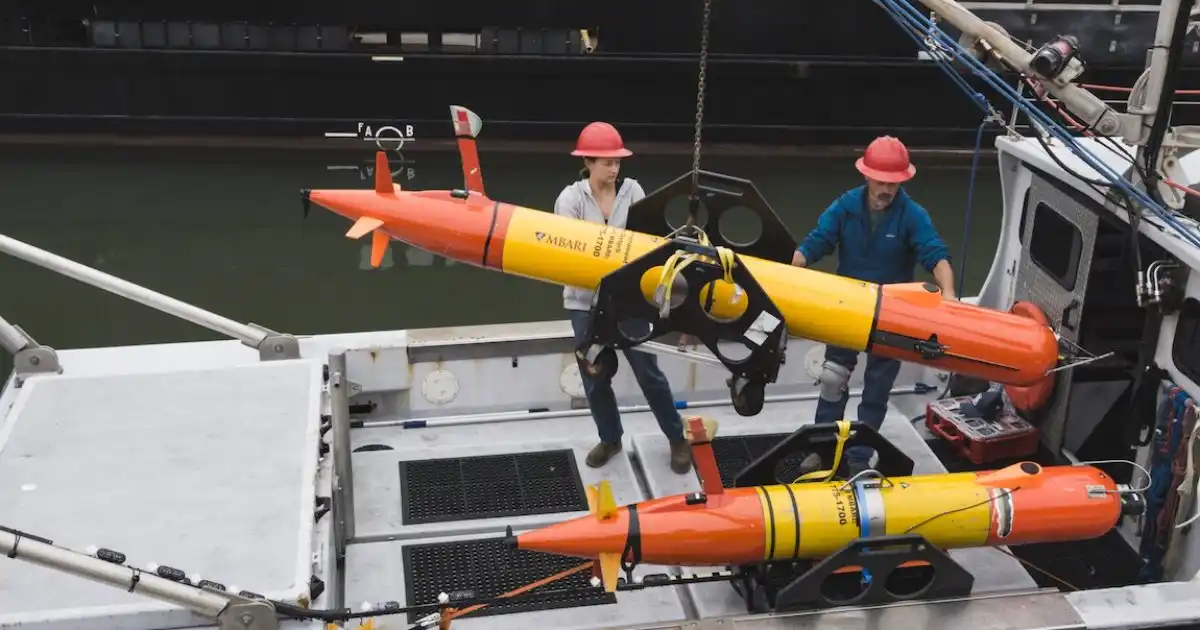
In addition, MAROKI aims to bring together research institutions, companies, government agencies, and other stakeholders along the maritime value chain to accelerate the practical implementation of innovations. The focus is on autonomous aerial, surface, and underwater systems for offshore wind energy, ports and maritime logistics, environmental and marine monitoring, search and rescue operations, and the protection of critical maritime infrastructure.
“High-performance maritime robotics is based on many years of research, extensive testing under real-world conditions, and the development of specialized infrastructure. For more than 20 years, the DFKI has been developing autonomous maritime systems in Bremen that have been tested in numerous national and international research and industrial projects. With MAROKI, we are pooling the partners’ accumulated expertise and laying the groundwork to make this knowledge even more effectively available to science, industry, and society in the future,” says Prof. Dr. Dr. h.c. Frank Kirchner, Executive Director of DFKI Bremen and Head of the Robotics Innovation Center.
The project is supported by stakeholders from politics, research, and the maritime industry. Kristina Vogt, Senator for Economic Affairs, Ports, and Transformation of the Free Hanseatic City of Bremen, welcomed the initiative: “Bremen has a strong maritime research landscape and is well-positioned to develop new technologies for the maritime economy. MAROKI brings together key expertise and testing capabilities from northern Germany. This also opens up new opportunities for companies—especially small and medium-sized enterprises and startups—to test and further develop their own technologies. In this way, scientific research can gradually give rise to economically viable innovation.”
Dr. Henrike Müller, Senator for the Environment, Climate, and Science of the Free Hanseatic City of Bremen, emphasized: “Over many years, Bremen has systematically built up scientific expertise and research infrastructure in the field of maritime robotics. With its internationally recognized research institutions, the city brings together expertise that extends far beyond its borders. MAROKI builds on this foundation and, in collaboration with experienced partners from Lower Saxony and Schleswig-Holstein, consistently strengthens Bremen’s profile as a hub for AI-based maritime robotics.”
Joint Testing and Innovation Ecosystem for Maritime Robotics
A key element of the MAROKI concept is the planned integration of the five partners’ existing research and testing infrastructures into a seamless development and testing environment. This is intended to encompass a variety of testing environments: from laboratory and simulation settings to protected maritime test areas and offshore trials under real-world conditions in the North Sea. This will enable autonomous maritime systems to be developed and tested step by step under increasingly realistic operational conditions.
“Maritime robotics places high demands on research and development. The systems must function reliably under changing and often difficult-to-predict conditions. This requires the collaboration of various scientific disciplines and technologies. With MAROKI, we aim to develop new approaches and involve companies and public sector stakeholders from the very beginning to ensure their practical requirements are taken into account early on,” said Dr. Leif Christensen, Head of Maritime Robotics at the DFKI Robotics Innovation Center and MAROKI’s consortium coordinator.
The partners contribute a variety of expertise and infrastructure to this effort:
The DFKI Robotics Innovation Center in Bremen has proven expertise in the development and testing of maritime robotics. A key research facility is the Maritime Exploration Hall: Equipped with a 3.4-million-liter saltwater tank, various specialized tanks, and modern simulation environments, it offers a wide range of opportunities to develop and test autonomous maritime systems under controlled and realistic conditions. In addition, the DFKI Marine Perception research division in Oldenburg contributes its expertise in intelligent sensor technology and AI-supported maritime environmental perception.
The Fraunhofer Institute for Manufacturing Technology and Applied Materials Research (IFAM) expands the consortium’s range of expertise through application-oriented research and testing facilities for offshore technologies. These include the Offshore Drone Campus in Cuxhaven, which features reference structures for applications in offshore wind energy, as well as the joint offshore test field operated by Fraunhofer IFAM and DFKI off the coast of Heligoland. There, technologies can be tested under maritime operating conditions and further developed with a view to their future application.
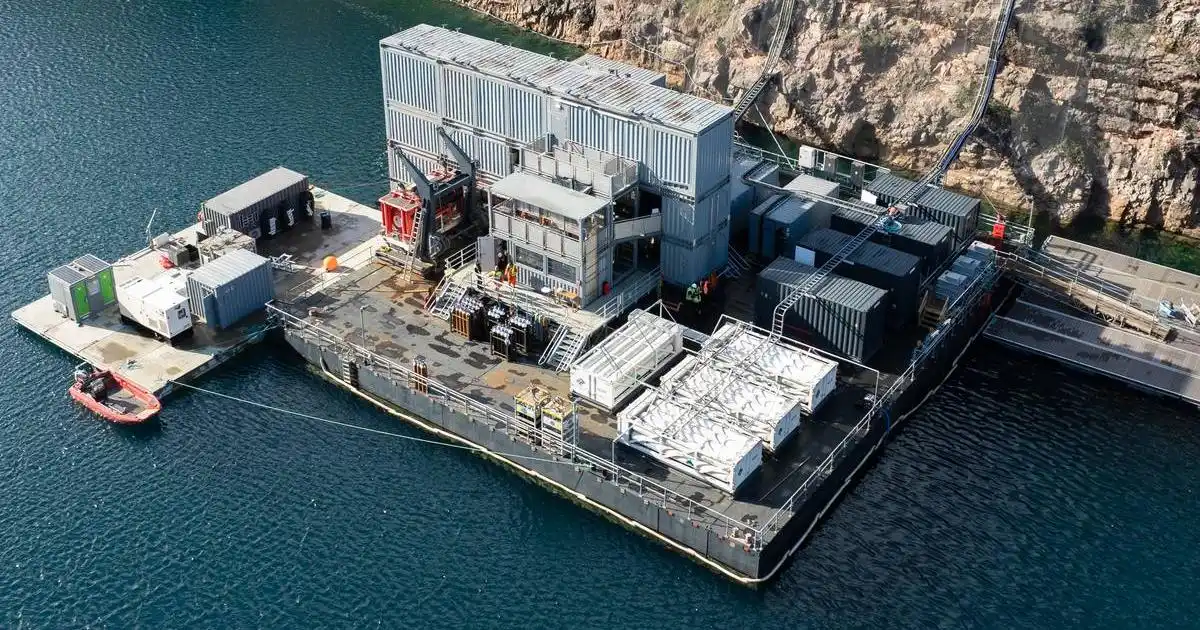
The DLR is involved through two institutes. The DLR Institute for the Protection of Maritime Infrastructure contributes expertise in AI-supported situational awareness systems, security research, and sensor-based monitoring of critical infrastructure. The DLR Institute for Maritime Technologies and Propulsion Systems complements the consortium with the floating technology platform MODULARIS. It is to be integrated into the planned test and validation chain and enable the testing of autonomous systems under real-world maritime conditions.
MARUM – Center for Marine Environmental Sciences at the University of Bremen contributes its expertise in marine research, autonomous environmental observation systems, and deep-sea robotics. The research infrastructure includes high-pressure test facilities capable of simulating conditions at depths of up to 6,000 meters, as well as an ROV training simulator. This allows for the investigation of underwater robotics technologies even under extreme pressure conditions and prepares for the deployment of unmanned underwater vehicles.
By pooling these infrastructures, small and medium-sized enterprises (SMEs) and startups, in particular, will have easier access to suitable testing and validation environments in the future. There, they can test their technologies and identify development risks at an early stage.
In addition, the MAROKI consortium is developing concepts for technology transfer projects, training and continuing education programs, common standards and open technologies, as well as support for spin-offs and international collaborations.
Concept Phase Begins in December
The concept phase will run from December 1, 2026, to August 31, 2027. During this period, the MAROKI consortium will develop a viable overall model for the organization, operation, financing, and sustainability of the planned Robo-Hub.
In the summer of 2027, all funded consortia will present their concepts to a panel of experts. Based on this, the BMFTR will decide which projects will be selected for the subsequent implementation phase. Funding for the concept phase does not constitute a commitment to the subsequent establishment and operation of the Robo-Hub.
The funding notifications were presented on November 9, 2026, during the BMFTR’s Digital Technologies Days in Berlin.