
The experiment pairs distributed acoustic sensing (DAS) on fiber-optic cable with data collected by high-frequency broadband seismic stations manufactured by Silicon Audio, closing a gap that continues to limit fiber-based sensing. DAS measures ground motion in relative terms with no absolute values, while seismometers are carefully calibrated at the factory to provide absolute measurements across a broad spectrum of frequencies.
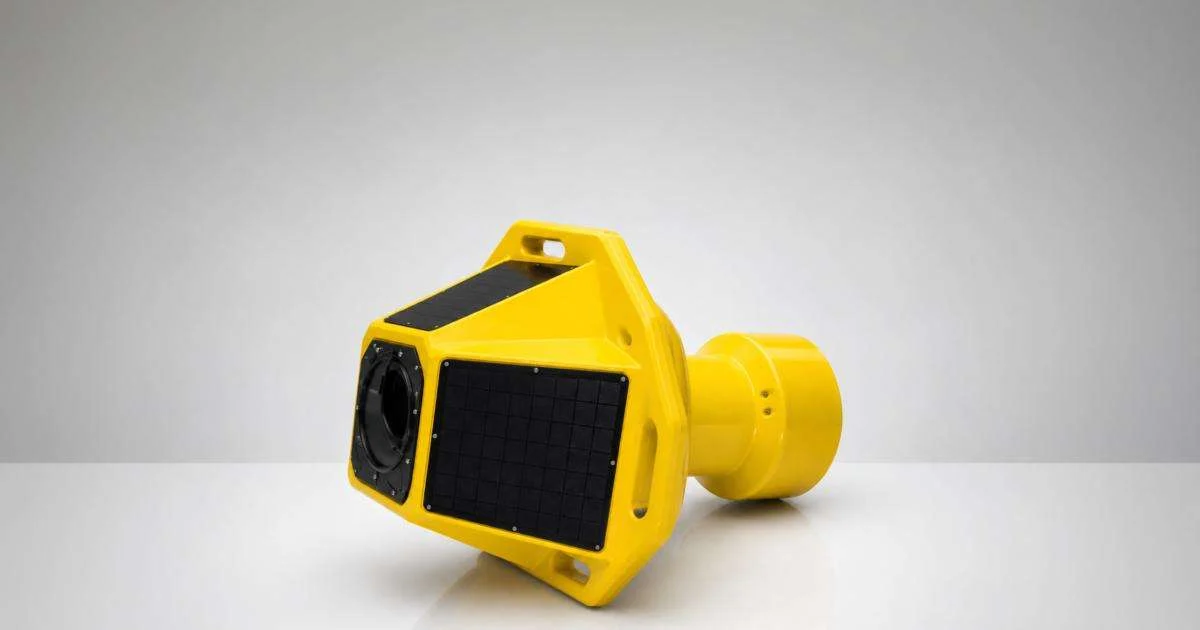
From truck to telemetry in hours: Silicon Audio Seismic and Subsea Data Systems personnel installed five high-performance broadband seismic stations using Silicon Audio’s new quick-deploy telemetered system, an ultra-compact package powered by a solar panel and small battery, coupled with a low-power cellular modem providing real-time telemetry. Data are simultaneously recorded on site and streamed to the cloud, with direct continuous access to the command-and-control interface.
From raw telemetry to system health in real time: Subsea Data Systems connected STRATA, its real-time monitoring and analysis platform, providing comprehensive insight into station and communications health, sensor performance, and live data from the moment each station goes online. STRATA is a slim and light solution that provides layers of actionable insights, alerts, and data access, dramatically enhancing the utility of live data streaming from any deployed time-series sensors, from the bottom of the ocean to remote deployments on land.
AI-driven sensor fusion: For the first time at a NEON site, two independent sensing methods—fiber-optic DAS and broadband seismic stations—will observe the same ground simultaneously in near real-time. Battelle will employ AI tools across both data streams, hunting for correlated signals that neither data set can resolve alone, combined with additional environmental data recorded by NEON.
“Field seismology deployments continue to be challenged with weeks of logistics, days of construction, and follow-up site visits before seeing a single waveform,” said Neal Hall, Ph.D., Chief Technology Officer at Silicon Audio Seismic. “At the NEON site, we deployed five stations within 24 hours, which immediately streamed data to the cloud. When deployment speed and immediate data availability aren’t the bottlenecks, you stop hoping to see good data at some point and start analyzing great data as soon as you leave the field.”
“The moment we deploy systems in extreme environments, it’s imperative to know they’re performing as intended,” said Matt Fouch, Ph.D., President of Subsea Data Systems. “Deploying STRATA ensures continuous monitoring of mission-critical metrics that turns real-time data into actionable intelligence. The Colorado deployment demonstrates this: telemetry is active, data are usable, and monitoring and research can begin immediately. Our collaboration with Battelle spans years, and this project shows why: they put their own resources behind an innovative idea and provided a world-class site for the project. We couldn’t ask for a better partner.”
“Leveraging NSF-funded NEON infrastructure for field studies to prove out new sensing approaches benefits both the research community and broader society,” said Mike Kuhlman, Ph.D., Chief Scientist at Battelle. “This is a core mission of Battelle’s IRAD program. In Colorado, pairing distributed acoustic sensing with co-located absolute seismic measurements yields information neither method provides alone, and combined with other environmental data, demonstrates what NEON sites can offer: long-term research data while supporting innovation.”